Free Shipping Over$200

- Products
- Marking
- Alternative

Choosing the Right Image Sensor for the Application
Choosing an image sensor is rarely about the megapixel count, and a design that picks on resolution alone usually comes to regret it. A sensor is a match between four things the application fixes: how fast the scene moves, how much light there is, what interface the processor can take, and what the lens in front of it can resolve. Pixels are the easy number to compare and the one that counts for least once those four are on the table, which is why a thoughtful design settles them first and reads the resolution last.
The split that decides the hardest is the shutter. A rolling shutter exposes the image row by row, which is cheap and fine for a still scene but smears or skews anything moving fast; a global shutter exposes every pixel at the same instant, which a moving machine or a drone needs and pays for in price and in larger pixels. After the shutter come the interface, since the data rate of pixels times frames times depth has to fit the bus the processor offers, and the light, since a smaller pixel gathers less of it. Resolution sits underneath all three rather than above them, and treating it as the headline is the mistake that sends a design down the wrong path.
Reading an image sensor's specs
Before any part number, it helps to know which numbers on an image sensor datasheet drive a design and which are decoration. The headline resolution is rarely the one that decides. The pixel size sets low-light performance, the shutter type sets how motion comes out, the frame rate at the working resolution sets whether the system keeps up, and the interface sets whether the processor can read the sensor out at all. A spec that looks impressive in isolation can be the one that never mattered for the job in hand.
Reading the key specs of a CMOS image sensor starts with separating the optical format and the pixel size from the megapixel count, since a one-megapixel global-shutter sensor with large pixels can be the right part exactly where a thirteen-megapixel phone sensor is the wrong one. The format decides which lenses fit and how much of the scene the sensor takes in, the pixel size decides how it behaves in dim light, and the interface decides whether the processor can move the data at speed. There is also the small matter of the supporting parts, since these sensors need a clock, a couple of clean supplies and an I²C or SCCB control bus to configure them, and a sensor with no driver for the chosen processor can cost more time than a harder spec. Each of those settles the part long before the pixel count gets a say.
Two specs deserve more weight than they usually get. Dynamic range decides whether a scene holding both bright sky and deep shadow comes back with detail in both or blown out at one end, which matters outdoors and at any window, and a high-dynamic-range mode trades frame rate or bit depth to widen it. Read noise and quantum efficiency together set the true low-light floor, the point where the frame is noise instead of picture, and both are fixed by the pixel and the process rather than by anything firmware can recover afterward. A sensor weak on these makes a grainy image no amount of processing cleans up.
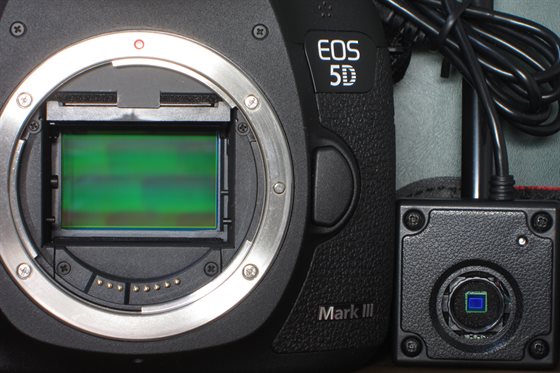
The consumer rolling-shutter family
The bulk of image sensors are rolling-shutter parts aimed at consumer capture, where the scene is mostly still and cost rules the choice. A long line of OmniVision parts covers this ground, from barely-there resolution up to autofocus modules, sharing a parallel or MIPI interface and a rolling shutter that suits a photo far more than a fast machine. Within that family the steps are about resolution, focus and the interface the processor can take, and the right one is usually the cheapest that clears the job rather than the highest resolution available.
The OV7670 is an entry-level image sensor, a VGA-resolution part with a parallel interface that has taught a generation of makers how a camera bus works in practice. It is cheap and documented everywhere, suits a learning project or a coarse capture, and is configured over an SCCB bus that behaves like I²C. Its eight-bit parallel output is both its accessibility and its ceiling, since that bus ties up a row of pins and a pixel clock and caps the frame rate well below what a serial link reaches, so it is the part to learn the pipeline on and seldom the part to ship in volume.
The OV2640 handles low-cost 2-megapixel capture with onboard JPEG compression, the feature that put it on countless ESP32-CAM boards, since compressing inside the sensor lets a modest microcontroller handle an image it could never move uncompressed. It can output raw, RGB or JPEG at several resolutions down to thumbnails, which lets a small host pick a size it can stomach over a slow link. It is the part for a cheap connected camera that sends stills or a slow stream, where the JPEG engine earns its place more than the resolution does, and a small processor leans on it to stay inside its memory and its bus. The trade is that the in-sensor JPEG fixes the compression the host receives, so a design that wants raw frames for its own processing has to look at a different part.
The OV5640 is a 5-megapixel sensor with autofocus, a clear step up that brings a MIPI interface alongside the parallel one and a voice-coil autofocus for a sharp image across changing distance. Its two-lane MIPI output carries full resolution at a usable frame rate where the parallel bus would choke, and its onboard auto-exposure and auto-white-balance hand the host a finished frame. It suits a product that wants a usable photo instead of a thumbnail, a document scanner or a better connected camera, and the autofocus is the dividing line, since a fixed-focus sensor is fine at a fixed working distance and useless where that distance moves around.
Shutter, interface, and light
Three constraints decide an image sensor ahead of its resolution, and the first is the shutter. A rolling shutter reads the array out one row at a time, so each row is exposed a moment after the one above it, and anything crossing the frame quickly lands skewed, a spinning propeller bent into a crescent or a passing car leaning forward. For a still subject that distortion is invisible and the cheaper rolling sensor wins, but for a machine inspecting parts on a moving belt or a drone mapping the ground below, a global shutter that exposes every pixel at one instant is the only honest choice, and it asks for more money and tends to bring larger pixels and lower resolution on the same die. The second constraint is the interface, since an image is a torrent of data, resolution times frame rate times bits per pixel, which climbs into hundreds of megabits or gigabits per second for anything fast. A parallel DVP bus is simple but slow and hungry for pins, while a MIPI CSI link carries far more over a few differential pairs, and the processor has to carry the matching receiver or the sensor cannot be used at all, a constraint that quietly rules out parts before any of their other specs are read. The third is light, the plain physics that a smaller pixel catches fewer photons, so packing more megapixels onto the same sensor area starves each pixel of light and raises the noise in a dim scene. A lower-resolution sensor with bigger pixels often makes a cleaner low-light image than a higher-resolution one, which is why the megapixel race quietly runs backward in security and automotive cameras. None of these is the number on the front of the datasheet, and all of them decide whether the sensor fits the job.
Embedded cameras and machine vision
Past the consumer parts sit the sensors chosen for a specific system instead of a general photo, where the interface and the shutter outweigh the picture looking pretty. These are the parts behind embedded cameras and machine vision, picked to feed a processor or an algorithm that wants a faithful frame more than a flattering one, and the choice leans as much on driver support and frame timing as on the image itself.
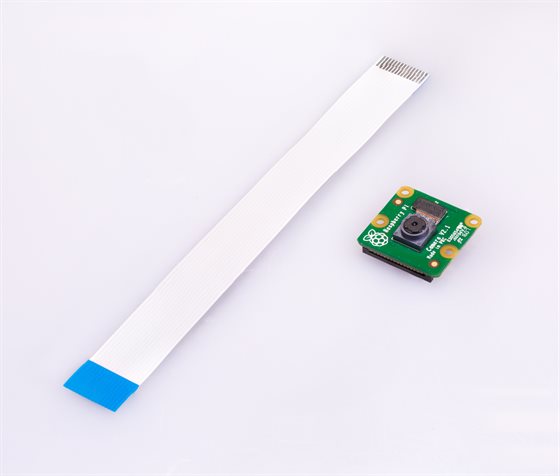
The IMX219 sits in an embedded camera module, the Sony sensor behind the common Raspberry Pi camera and many others, an 8-megapixel back-illuminated part on a MIPI CSI-2 interface with the driver support that makes it straightforward to bring up on Linux. Its appeal is as much the ecosystem as the silicon, since a sensor with mature drivers and a known module saves weeks over a part that looks good on paper but has no support behind it, and a two-lane CSI-2 link gives it the bandwidth for full-resolution stills and high-definition video. That saved integration time is often the real reason it wins a design over a nominally better sensor. Its rolling shutter and small pixels keep it a daylight and indoor part, not one for fast motion or a dim scene, which the embedded designer has to weigh against how easy it is to bring up.
The AR0234CS is a global-shutter machine vision sensor, a 2-megapixel part that freezes motion with no skew, which is what barcode reading, robotics and drones need the moment the camera or the subject is moving. It runs full resolution at high frame rates and accepts an external trigger so several cameras can capture the same instant, the feature a multi-camera rig leans on. Its global shutter and solid low-light behavior at a modest resolution are exactly the trade machine vision wants, since an algorithm needs a clean undistorted frame far more than a high pixel count, and the global shutter lets it work with pulsed or strobed lighting that a rolling sensor would smear into bands. That pairing of a global shutter with a bright strobe is how a fast inspection line freezes a part moving past at speed.
The MT9V034 does wide-dynamic-range global-shutter imaging, an older but enduring part at WVGA resolution built for automotive and robotics, where the scene swings from a dark tunnel to bright sun and the camera cannot afford to lose either end. It carries an automatic exposure control and an LVDS output option for running the data over a longer cable than a parallel bus allows, both built for the vehicle and the robot. Its wide dynamic range and global shutter at low resolution suit a vision system that values seeing into shadow and highlight over counting pixels, and it has stayed in production because that combination is harder to find than one more high-megapixel rolling part.
Across this group the resolution is nearly an afterthought, sitting well behind the shutter, the interface and the dynamic range, because the customer is an algorithm that wants a faithful frame and not an eye that wants a pretty one. A part chosen here on its megapixels, ignoring its shutter and its drivers, is the one that stalls a project halfway through bring-up.
Matching the sensor to the job
An image sensor is the one part where the megapixel number on the box is the worst guide to whether it fits. The shutter has to match how fast the scene moves, the interface has to match what the processor can receive, and the pixel has to match the light available, with the optical format matching the lens, before resolution earns a glance at all. Run those four checks first and the candidates collapse to a handful, often none of them the highest-resolution part on the page.
Get those matches right and a modest sensor beats a higher-resolution one fighting the wrong fight. The pixel count is what sells the part on a shelf, and the shutter, the interface and the light are what decide whether it works in the device once it ships.