Free Shipping Over$200

- Products
- Marking
- Alternative

AI Memory Squeeze: How It Changes Industrial and Embedded BOM Planning
AI Memory Squeeze: How It Changes Industrial and Embedded BOM Planning
Quick Summary
AI has made memory planning a board-level sourcing issue again. The pressure starts with high-performance memory near accelerators, but ordinary embedded memory can feel the effects through supplier roadmaps, packaging choices, allocation priorities, and lifecycle changes.
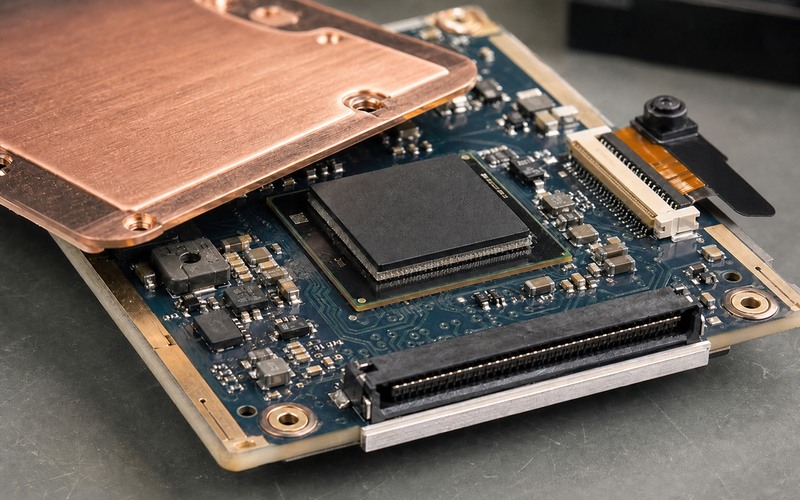
The short answer: industrial and embedded teams should review memory parts before they become urgent. SPI flash, eMMC, NAND, LPDDR, DDR, EEPROM, FRAM, and managed flash may be low-cost line items, but they can affect firmware, boot timing, field updates, safety files, and production test.
That matters because industrial and embedded products do not usually chase the newest memory first. They need stable parts, long availability, known behavior, clear change control, and repeatable qualification. A small SPI flash, eMMC, NAND device, LPDDR part, or temperature-grade DRAM can sit in a product for years. If that part changes or becomes harder to buy, the redesign can touch firmware, boot timing, security, enclosure temperature, agency approvals, and production test.
The practical question is not whether AI will consume every memory part. It will not. The question is which memory choices in an ordinary industrial or embedded BOM are most exposed when the market starts favoring AI infrastructure.
What Happened
Memory demand is becoming more uneven. AI systems pull hard on high-performance memory, while many industrial and embedded designs still depend on mature densities, conservative packages, and long-lifecycle parts. Those two worlds share some of the same supplier roadmaps, packaging resources, and planning assumptions.
For buyers, the old habit was to treat memory as a manageable commodity once a design was stable. That habit is risky now. A memory part can stay electrically simple and still become difficult to source because the vendor is shifting capacity, changing internal die, retiring a density, or prioritizing larger customers.
For engineers, memory is rarely isolated. A boot device touches firmware structure. Working memory touches processor choice and timing closure. Managed flash touches power-loss behavior and endurance. A substitute that fits the footprint may still require validation work.
The useful lens is a BOM risk review rather than a market forecast.
Component-Level Impact
| Memory area | Why it matters |
|---|---|
| SPI NOR and boot flash | A replacement can affect bootloader assumptions, secure boot, erase behavior, and field updates. |
| eMMC and managed NAND | Internal die or controller changes can change endurance, power-loss behavior, and performance. |
| DRAM and LPDDR | Package, temperature grade, timing, and roadmap stability can drive processor and layout decisions. |
| EEPROM, FRAM, MRAM | Small nonvolatile parts can hold calibration, identity, logs, and keys that block shipment if unavailable. |
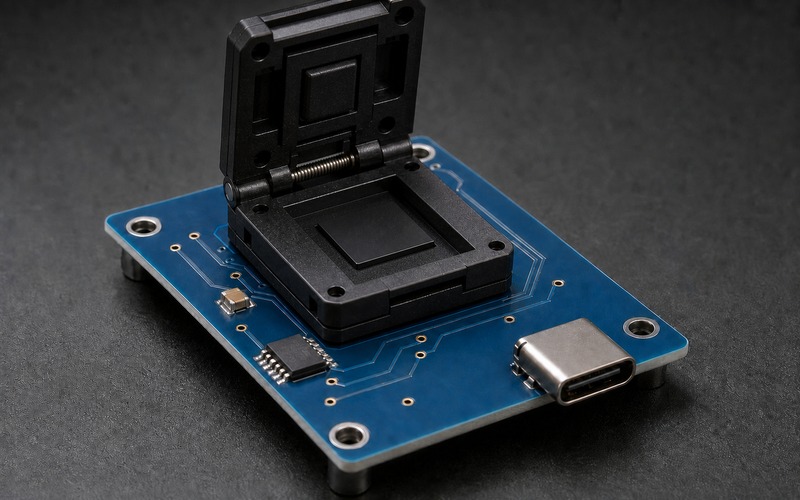
Start with boot and code storage. Many embedded products rely on SPI NOR flash, eMMC, NAND, or small managed flash devices. These parts often look low risk because they are inexpensive and familiar. In practice, they can be hard to replace. A different density, page size, erase behavior, command set, or power-loss characteristic can break assumptions in the bootloader or field update process.
Working memory is the next group. LPDDR, DDR3L, DDR4, DDR5, and specialty temperature-grade DRAM do not move through the market in the same way. A mature DRAM used in an industrial controller may be technically boring but commercially fragile if the vendor roadmap shifts away from that package or density.
Memory around processors and edge accelerators needs a separate review. Vision processors, high-performance MCUs, FPGAs, and edge AI modules may need external memory to keep compute blocks fed. If the memory changes, the processor, layout, termination, power sequencing, and SI validation may need another pass.
Do not ignore small nonvolatile parts. EEPROM, FRAM, MRAM, and small serial flash devices may hold calibration data, configuration, logs, keys, or device identity. A shortage there can stop production as surely as a missing processor.
Engineering Design Considerations
The best time to check memory risk is before the product is under shortage pressure. Once a factory is waiting for one flash part, the team has fewer good options.
Sort memory parts into three groups: exact-match, requalification-friendly, and redesign-required. An exact-match part is tied to boot code, certification, footprint, timing, or production test. A requalification-friendly part has known alternates that fit electrically and mechanically. A redesign-required part gives the team room to change interface, capacity, or memory hierarchy.
Capacity should not be chosen only from today's firmware image. Products need room for security updates, field logs, language packs, customer variants, and future diagnostics. At the same time, over-specifying memory can create avoidable supply risk. A larger part may look safer today and become harder to buy in the next cycle.
Temperature grade and endurance should be checked before cost. Industrial and automotive products may need memory that survives heat, vibration, long idle periods, and repeated writes. A consumer-grade alternate can pass a quick boot test and still be wrong for the product.
Firmware flexibility is one of the best sourcing tools. If the bootloader can recognize more than one memory ID, capacity, or vendor, procurement has options. If the firmware assumes one exact device, the buyer has little room when the market moves.
Sourcing Impact
The biggest sourcing risk is assuming that memory will behave like a commodity forever. It may, until it does not. Embedded products often have smaller volumes and longer lives than consumer products, so they may not receive priority when suppliers allocate constrained output.
Buyers should ask for lifecycle status, product change history, die revision policy, package roadmap, and last-time-buy risk. A part with a low unit price can become expensive if it forces firmware changes, agency retesting, or a production hold.
Managed flash deserves extra attention. Some vendors can change the internal NAND or controller while keeping the same ordering code. That may be acceptable, but only if the product test plan checks boot reliability, endurance, power-loss behavior, and performance variation.
Second sourcing should be designed before the shortage arrives. A purchasing-approved alternate is not enough. The board, firmware, test fixture, and compliance file all need to support the alternate.
Buyer Checklist
- List every memory part by function: boot, code storage, working memory, logs, configuration, and identity.
- Confirm lifecycle status and last-time-buy risk for each exact ordering code.
- Ask whether the vendor can change die, controller, or internal NAND under the same part number.
- Check alternate footprint, voltage, timing, temperature grade, endurance, and package height.
- Confirm firmware support for multiple memory IDs and densities.
- Review inventory policy for low-cost memory parts that can still block shipment.
- Ask engineering which memory parts are safety-related, certified, or hard to requalify.
Common Mistakes to Avoid
- Treating memory as a commodity after the first production build.
- Approving a managed flash alternate without power-loss and boot testing.
- Choosing capacity only from today's firmware size.
- Ignoring small EEPROM, FRAM, or serial flash parts because they are low cost.
- Assuming a processor reference design guarantees long-term memory availability.
Related Reading
- Compute choices and memory bandwidth
- Boot and data-storage part selection
- Moving a development board into production
What to Watch Next
Watch mature densities and packages as closely as high-performance memory used in AI systems. The first warning sign may be a longer lead time on an older part, a change notice on a managed flash device, or a supplier pushing a design toward a newer density.
Processor roadmaps also matter. A processor reference design can quietly narrow the supported memory choices. If a design follows that reference too tightly, it may inherit the same sourcing limits.
The right response is not panic buying. It is memory mapping: know what each part does, how hard it is to replace, and which alternates have already been tested. That gives the buyer room to act before a small memory part becomes the reason a finished product cannot ship.