Free Shipping Over$200

- Products
- Marking
- Alternative

Moving from an AI Development Board to a Board You Can Ship
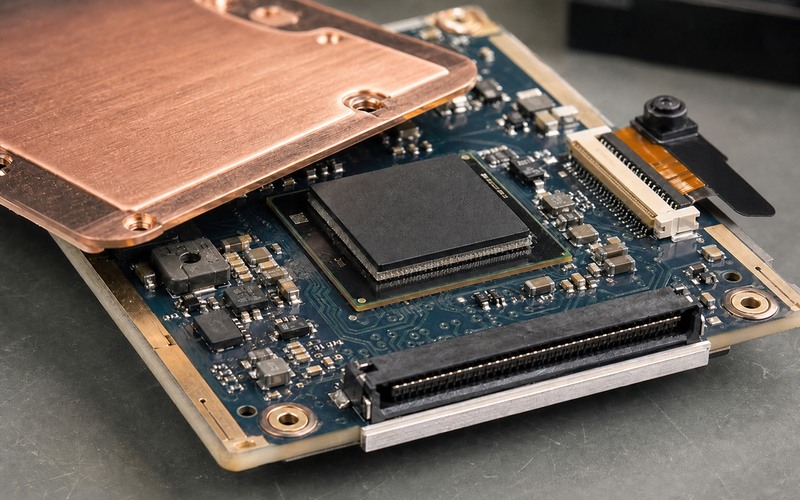
The development board did its job the day the demo ran. A model held its frame rate, the camera fed it, the team saw the product work, and a photo of that bench went into a slide deck that raised the next phase of the project. The board that ships is a different machine. It has the product's own power tree, its own boot path, its own enclosure and connectors and approvals, and none of those existed on the bench. Between the two boards sits a stretch of engineering with its own habits and its own ways of failing, and walking it deliberately is cheaper than discovering it, and the walk has been made often enough that its map is no secret.
The gap is wide because the development board was built to hide it. Its maker spent effort so that power, boot, debug, and thermals would never interrupt an evaluation: a generous regulator tree, a programmed boot flow, a debug port always live, copper pours that quietly cool whatever the demo asks. The product inherits none of that for free. Every convenience the bench provided has to be either rebuilt on the production board or consciously declined, and the list of those conveniences is longer than it looks from above, which is why the first artefact of this phase is a list rather than a schematic.
The demo proved the idea, not the board.
What the bench board was for
A development board is an answer machine. Can the model hit the rate, does the sensor resolve the scene, will the pipeline hold for an hour: it exists so those questions get answered in days, on hardware somebody else debugged, with every interface broken out, every option open, and nothing committed. Used that way it is the cheapest risk reduction a project can buy, and the discipline is to harvest its answers while refusing to mistake it for the first article of the product, no matter how long it has lived on the desk.
Its prices are hidden in kind rather than in money. It is larger than any enclosure the product will allow, it spends parts the product cannot afford, its layout serves probing rather than cost, and its software image carries a full distribution of packages the product will never ship. The moment the questions are answered, those prices start compounding, and teams that linger on the bench board past that moment are paying rent on a building they have already finished using. The exit is easier to take when its date was set in advance, written into the plan as the day the answers exist.
The move, walked deliberately

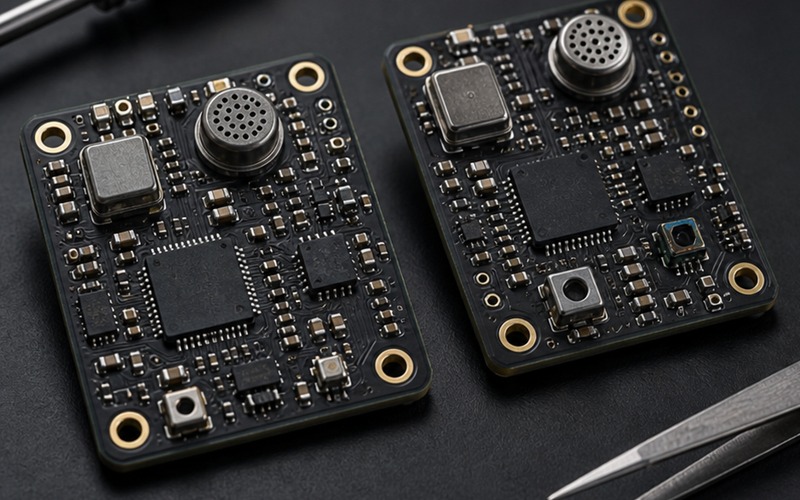
The transfer has a shape, and moving from a development board to a board you can ship walks it in full. The short version is an inventory: every service the bench board provided, named, and for each one a decision about how the product will provide it instead.
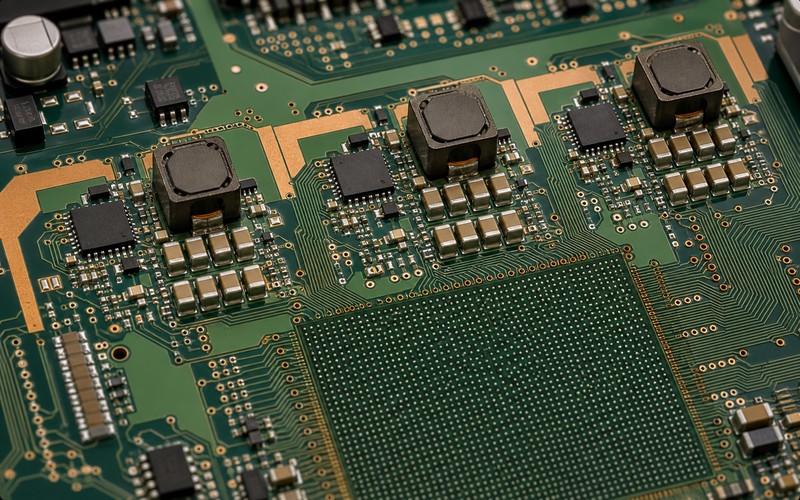
The power tree leads the list, because the bench board's regulators were sized for every peripheral its maker imagined and sequenced by an engineer the team never met; the product's tree is designed against its own loads, with the sequencing rules of the main silicon read from the data sheet and honoured on purpose. Boot is next: the bench board arrived booting, while the product has to choose its boot source, program its first article, and survive a failed update in the field, which is a design area rather than a checkbox. Debug follows, since the port that was always there is now a decision, and the honest answer is to keep a serial console and a programming header on the production layout, hidden behind the enclosure if cosmetics demand, because the first field failure will repay that connector a hundred times. The reference schematic is a help and a trap in the same document: copying it wholesale carries circuits the product does not need, while pruning it blind cuts the pull-up or the strap that made boot work, so each block is carried or cut with its purpose written down. Around all of this sits the unglamorous ring the bench never showed: the connectors that survive vibration, the protection on every line that leaves the box, the test points the factory will need, the EMC behaviour that turns a working prototype into a certifiable product. Manufacturing has a seat at this table from the first sketch, since the board that ships is also the board a factory must build and test: fiducials and panelisation the assembler asks for, test points on every rail and every bus the bed-of-nails will probe, a programming and serialisation step the line can run without an engineer present, and a yield plan for the first lot that assumes something unexpected, because something will be. Bring-up closes the move: the first articles are powered in stages, rails checked before the silicon is allowed to boot, boot proven before the application is loaded, so that the inevitable first-spin mistake is found at the stage it lives in rather than as a dead board with forty suspects.
None of these steps is exotic. The failure mode is skipping one of them on schedule pressure, and the fix is the inventory, written before the layout starts.
The enclosure deadline runs on its own clock through all of this. Tooling for plastics and metalwork commits earlier than the electronics like to admit, and the mounting holes, connector positions, and antenna keep-outs freeze with it, so the board outline is negotiated with the mechanical design while both are still cheap to move, not discovered to disagree at the first fit check.
A second spin is the normal cost of this road. The teams that plan one ship on time; the teams that planned zero ship after their unplanned one.
The numbers that do not carry

The bench numbers flatter, and whether dev board performance carries to production is the audit. The development board ran the model in open air, on a board whose copper was a heatsink, from a supply with margin to spare, and the product will run it in a sealed enclosure at the top of its ambient range on the power tree the budget allowed.
Thermals move first. The sustained rate that held on the bench falls when the same silicon throttles inside a case, and the honest measurement is taken in the enclosure, at the worst ambient, after the temperatures settle, not in the first thirty seconds of a demo. The power tree joins it: a rail that sagged harmlessly on the bench supply browns out on the product's own converter, and the inference that dies mid-frame at the worst ambient is the same model that never missed on the bench.
Storage and memory move next. The bench board streamed its model from fast storage through generous RAM; a product that economised either one feeds the silicon through a narrower pipe, and the frame rate follows the pipe. The bench board's exact memory configuration is part of the number it produced, and changing it re-opens the measurement. The radio and the camera take their cut as well, since shared buses and shared power mean the model's rate on an idle bench is not its rate while the product streams, records, and uploads at once.
The audit is cheap insurance: re-run the bench workload on the first production articles, in the enclosure, against the bench numbers, before anybody promises a customer the figure from the slide deck, and the audit is written into the schedule as a gate rather than a hope.
Module first, bare chip maybe
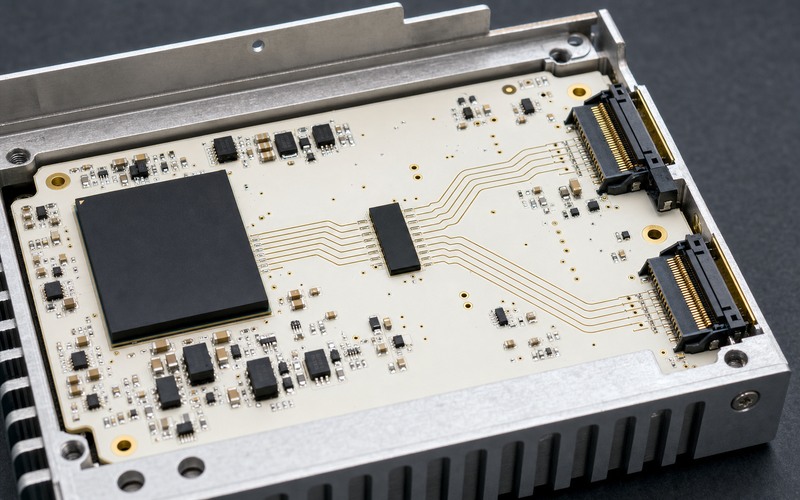
For designs that prototyped on a module, the volume question eventually arrives: keep paying the module's price, or move the silicon onto the product's own board. The cost of moving from a module prototype to a bare chip is the honest ledger. The module's price bought a routed DDR bus, a proven power sequence, a tuned radio with its certification, and a board support package somebody else maintains, and the bare-chip design buys all of those back at engineering rates: high-speed layout, a power tree with the silicon's own sequencing, fresh EMC and radio approvals, and a bring-up the module had already done.
The arithmetic is volume against engineering. The module's premium, multiplied by lifetime units, stands against the redesign's cost plus its schedule risk, and the crossover sits further out than instinct puts it, commonly in the tens of thousands of units once the approvals and the second spin are counted honestly. A team quoting that move budgets the radio recertification alone in months, and the DDR layout at a seniority of engineer the project may not have on staff.
The middle path is often the right one: ship the first product generation on the module, let revenue prove the volume, and move to the bare chip in the cost-reduction spin with the product's behaviour already settled. The module taught the team what the product needs; the bare-chip board is how the bill of materials learns it.
The second source, named now
Sourcing belongs in this move, not after it. Putting a second source into the BOM at the prototype stage costs almost nothing while the layout is still soft, a footprint chosen to fit two vendors' parts, a regulator picked from a family with a pin-compatible twin, a flash part whose density exists in three catalogues, and the same decision taken after the first shortage costs a respin under the worst possible schedule. The prototype is when alternates are a column in a spreadsheet; production is when they are a crisis. The same habit extends to the silicon itself where the architecture allows it, and to the connectors and magnetics whose shortages outrun every forecast, since the parts that stop lines are rarely the expensive ones. A footprint that accepts two vendors costs a thought today and a column in the spreadsheet, and it is the cheapest insurance this page has to offer.
What decides it
The inventory decides the move. Every service the bench provided is named, owned, and either rebuilt or declined, and the board that ships is the one whose team wrote that list before the layout started rather than reconstructing it from failures afterwards.
Measurements decide the promises. The numbers that go to customers are taken on production articles, in the enclosure, at the worst corner, and the bench figures are retired with honour the day those exist, kept for history and quoted to no one.
Sourcing decides the years after. The module-or-chip ledger is run on real volumes, the second sources are named while the layout is soft, and the product that ships for a decade is the one that did its supply engineering at the prototype, when it was cheap.