Putting a Second Source into the BOM at the Prototype Stage
A second source is often discussed after a part becomes hard to buy. By that point, the footprint, schematic notes, firmware timing, test method and approval record may already be tied to the first device. The alternate part then arrives as a purchasing emergency instead of a design decision.
That is the wrong time to start. If the product is expected to live past the first production build, the second source belongs in the prototype BOM while the board can still change. The goal is not to list two part numbers beside one line. The goal is to prove that the second part can survive the same electrical, thermal, mechanical, firmware and sourcing conditions as the primary choice.
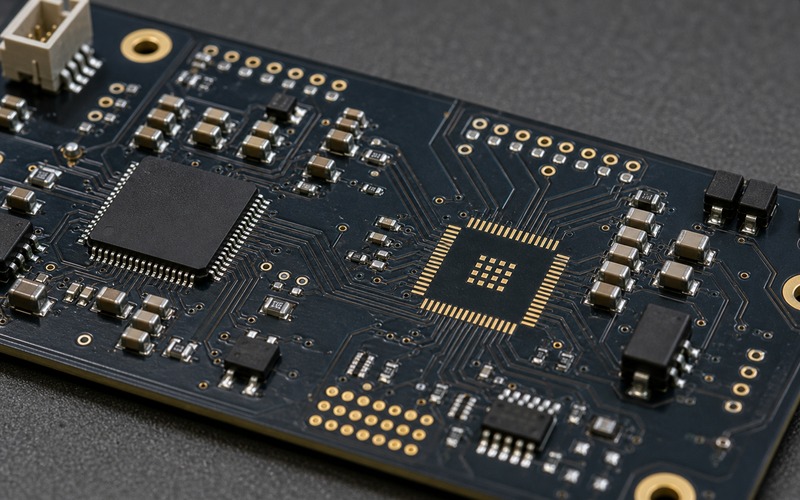
Each candidate part should be checked against the real electrical, thermal, mechanical and sourcing conditions it will face before the board moves into production. That review keeps the BOM from turning into a set of hopeful alternates that no one has built, measured or approved.
Start With the Circuit Function
Begin with the job the part performs, not with a package search. A regulator keeps a rail inside a tolerance band across input range, load step, temperature and output capacitor spread. A level shifter preserves logic thresholds and timing across both sides of an interface. A sensor front end protects a weak signal from noise, leakage and bias error. A clock part sets jitter, startup time and frequency stability for the devices around it.
When the function is written clearly, a second source can be judged against the same job. The primary and alternate do not need to share every number in a data table, but they must protect the same circuit behavior. For a power part, that may mean transient response, minimum on time, compensation range and thermal shutdown behavior. For an interface part, it may mean input threshold, fail-safe state, bus capacitance, ESD structure and hot-plug tolerance.
This step also prevents a false match. Two devices can share a package and pin names while handling startup, fault recovery or edge cases in different ways. If the BOM only records the package and headline rating, the risk will surface later during pilot production or field returns.
Separate Real Equivalence From Loose Similarity
A real second source is more than a similar catalog line. It has a defined use case on the board, an approved footprint, a checked set of limits and a test result that proves the circuit still works. Loose similarity is weaker. It says the part looks close enough on paper, without proving the margins that make the board reliable.
Separate these categories in the purchasing record. One group can be approved for direct use. Another group can be approved only after an engineering review. A third group should remain a reference candidate, not a build option. This avoids the common problem where an untested alternate slips into a production buy because its package and headline voltage look acceptable.
The review should include limits that do not fit neatly in a short BOM note: derating, leakage at temperature, startup delay, fault latch behavior, soft-start timing, pullup needs, moisture level, reflow profile, terminal finish, reel orientation, marking style and inspection method. Some of these details do not change the schematic, but they can change production yield or failure analysis.
Lock Footprint and Pinout Before Layout
The prototype layout is the best moment to choose whether a second source will share one footprint, use a dual footprint or require a later board revision. If the alternate is found after layout release, the board may already be pinned to one body size, one thermal pad pattern, one exposed pad tie or one pin escape route.
A shared footprint is attractive, but it must be checked with mechanical and assembly data. Pad length, solder mask opening, exposed pad size, corner radius, package height, terminal type and coplanarity can decide whether two packages can use the same land pattern. A package that looks pin compatible in a symbol library can still need a different stencil, courtyard or X-ray rule.
Pinout review needs the same discipline. Check no-connect pins, thermal pins, exposed pads, mode pins, address pins, enable polarity and fault outputs. A pin that is reserved on one part may need a bias on the alternate. A power-good pin may behave open drain on one device and push-pull on another. The board should not assume those differences away.
If dual footprints are used, keep them manufacturable. Overlapping pads, unusable inspection angles and strange solder-mask slivers can create more risk than the second source removes. The alternate path must be a buildable layout, not a symbolic drawing.
Check Electrical Ratings Before Package Selection
Electrical limits need to be checked against the board, not against a single number in isolation. Voltage rating, current rating, power dissipation, leakage, noise, accuracy, input range, output swing, propagation delay and ESD rating all change meaning when they meet the surrounding circuit.
For a regulator, compare dropout, switching frequency, minimum load, output capacitor stability, current limit behavior and thermal resistance. For a MOSFET or load switch, compare gate threshold, on resistance at the actual drive voltage, body diode behavior, safe operating area and package heat path. For a signal switch or interface IC, compare bandwidth, capacitance, leakage, common-mode range and protection structure.
The first prototype can hide marginal choices because the board is lightly loaded, the lab temperature is comfortable and only a few units are built. A second source needs wider proof. Run both candidate parts across input range, temperature, load case, sleep state, startup state and fault condition. Record which measurements define approval rather than treating one working bench unit as enough evidence.
Keep Firmware and Test Assumptions Visible
Many parts that look interchangeable in hardware still affect firmware or production test. An alternate sensor may use a different register default, output timing, address option or interrupt behavior. A memory device may change erase timing, status-bit meaning or deep-power-down exit time. A power supervisor may reset at a slightly different threshold or delay.
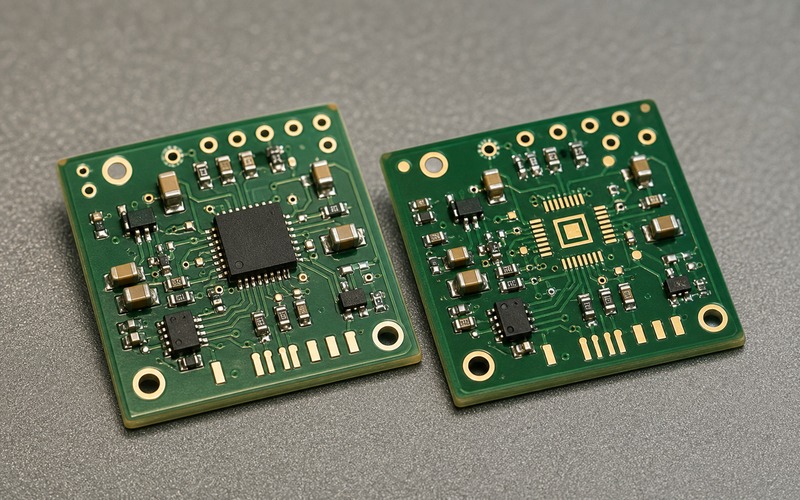
Firmware assumptions should be listed beside the component decision. If the alternate needs a different driver branch, boot timing, calibration value or test command, the BOM needs a control rule. It may still be an approved second source, but it is not a silent substitution.
Factory test needs the same visibility. The test fixture may read an ID register, measure a rail at a fixed delay, check a communication response or look for a specific fault state. If the alternate changes that response, the test program must be updated before the part enters a build. Otherwise the factory will reject good boards or pass boards that were never validated with the new part.
Build the Purchasing Record Early
A second source only helps if purchasing can see exactly what is approved. The BOM should identify the primary part, the approved alternate, the manufacturer, package, temperature grade, suffix rules, approved assembly notes and any condition that changes the decision. If one alternate is approved only for a certain board revision or firmware version, that limit belongs in the record.
The record also needs evidence. Store the schematic review result, layout review notes, measurement summary, firmware impact, assembly note and approval owner. This keeps future buying decisions tied to engineering proof instead of memory. It also helps when a distributor offers a near match that is outside the approved set.
Lifecycle status belongs in the same review. A second source with a weak lifecycle, narrow package support or unclear change notice process can reduce risk in one area and add it in another. The safest BOM line is not always the lowest price line. It is the line that gives the product a controlled path through production, service and revision changes.
Suffix control is easy to overlook. The base number may identify the circuit, while the suffix can define temperature grade, reel type, moisture packing, terminal finish, automotive qualification or packing quantity. If the BOM approves the base number but ignores the suffix, the buying team may receive a part that fits the pads yet fails the environmental or assembly rule.
The purchasing record should also say who can release an alternate into a build. A small pilot lot may need engineering signoff, incoming inspection notes and a firmware branch marker. A mature product may allow purchasing to use either approved part after routine checks. Making that rule visible prevents a late decision from being made through email memory.
Decide Which Substitutions Stay Approved
Approval should not last forever without a trigger. If the board revision changes, the firmware changes, the enclosure changes, the thermal path changes or the assembly house changes a process, the second source may need another check. A component that passed one prototype can fail on a denser board or a hotter enclosure.
Set a review rule before production. Some alternates can stay approved across board revisions. Some require a short engineering check before use. Some should be restricted to emergency review. This gives buyers room to work while keeping the engineering boundary clear.
The same rule helps with field support. When a return comes back, the team can identify which approved part was fitted, which revision it belonged to and which test evidence supported it. That is far better than finding a substitute only in purchasing history after a failure has already occurred.
Change notices need a place in the rule set. A manufacturer die change, assembly-site change, mold compound change or package drawing update can affect a part that was already approved. The second source plan should say which notices trigger electrical retest, layout review, firmware check or incoming inspection update. Otherwise a component can remain listed as approved long after the evidence behind that approval has aged.
Prototype Stage Checklist
Before the prototype BOM is frozen, check function, package, pinout, pad pattern, thermal pad, power limits, signal limits, firmware assumptions, test method, assembly process, lifecycle state, change notice path and approved purchasing suffix. Build at least a small validation set with the alternate if the product depends on long-term supply control.
A good second source does not remove engineering work. It moves that work earlier, while the board, firmware and purchasing record can still be shaped around it. That is how a prototype BOM becomes a production BOM with controlled substitution risk instead of a list of hopeful alternatives.
The clean handoff is a short approval record that a buyer, layout engineer, firmware engineer and test engineer can all read. It should state the circuit function, accepted part numbers, package limits, required measurements, firmware notes, test updates and the person who owns future changes. If any of those lines are blank, the part may still be a candidate, but it is not a second source that belongs in a production buy.