Free Shipping Over$200

- Products
- Marking
- Alternative

Building an Edge AI Box Within Its Power and Thermal Ceiling
An edge AI box is designed from its ceiling down. Before a processor is picked or a model is sized, somebody has decided where the unit will live, what supply that place offers, and how much heat the enclosure may shed there, and those three answers cap everything that follows. A box on a PoE drop has a hard wattage budget written in a standard. A box on a factory rail shares a cabinet with gear that hates fans. A box under a highway camera gets no maintenance visit for years. The silicon inside is chosen to fit those facts, not the other way around.
This page is the system view of decisions the deeper pages treat alone: the power tree, the cooling, the compute. A box is where they meet and trade against each other, since every watt the compute takes is a watt the thermal design must move and the supply must deliver, through the same walls, on the same budget. The work is making one coherent product out of three budgets that all want more, with the trades written down where the next engineer can find them.
The ceiling is set before the first part is picked.
The ceiling that shapes it
The numbers arrive from outside. The thermal and power ceiling that shapes an edge AI design walks where they come from: a PoE class that grants a fixed handful of watts, a vehicle rail that sags and spikes, a sealed IP-rated shell that turns every watt into a temperature rise, a site rule that bans moving parts. Each one is a constraint the design cannot negotiate with, and together they draw a box around the silicon menu before performance is even discussed.
Working inside the ceiling is a budgeting exercise. The compute takes its share, the sensor and the radio take theirs, the conversion losses take a cut of everything, and the sum has to clear the supply with margin at the worst corner. A design that starts from the model's demands and shops for power afterwards tends to meet its ceiling late, in an enclosure already tooled, where the options have narrowed to slowing the silicon or reopening the mechanicals. Writing the budget down as a table with owners, the compute's share, the sensor's, the radio's, the losses, and a held reserve, turns the ceiling from a vibe into an artefact the whole team designs against, and the reserve line is the one that saves the schedule when the radio grows an amplifier nobody forecast.
An entry box on integrated silicon

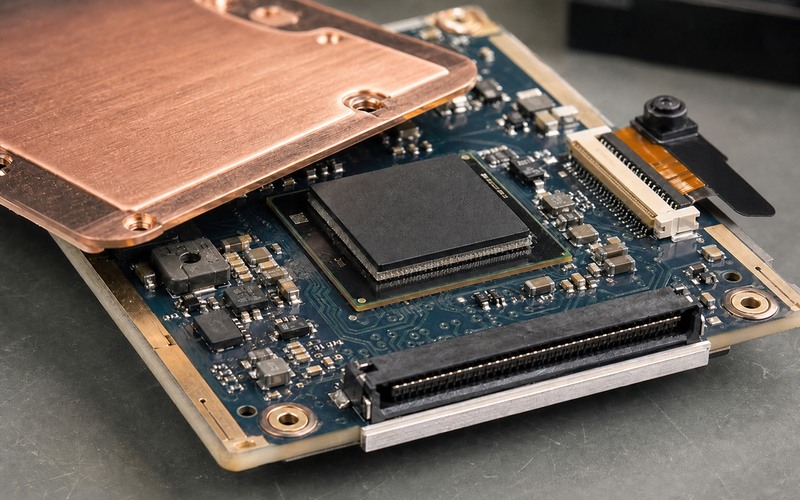
One route to a box is a module that arrives as a finished compute system. Jetson Orin Nano as an entry edge inference box is the common shape of it at the entry tier: a module carrying the GPU, the CPU, and the memory, dropped onto a carrier board that breaks out the product's own mix of camera lanes, network, and storage.
What the module sells is everything around the silicon. The software stack arrives running, with the inference runtime, the camera pipeline, and the board support maintained by the vendor rather than assembled by the team; the power behaviour is characterised into selectable envelopes, so the box can be designed against a published seven or fifteen watt figure instead of a measurement campaign; and the thermal solution has reference designs the enclosure can be drawn around. The carrier ecosystem does the same for the hardware, with off-the-shelf carriers for prototypes and a documented path to a custom one when the product settles. The camera pipeline alone repays the module on a vision product, since the lanes, the driver, and the ISP tuning arrive working where a from-scratch board spends weeks on them. The same stack carries the quantisation and deployment tooling, so the model that trained in the cloud lands on the box through a path the vendor tests with every release rather than one the team glued together. The price of all this is real: the module costs more than the silicon it carries, the roadmap and the lifecycle belong to the vendor, and a supply pinch on modules lands on every product built from them at once. A team that takes this route is buying schedule, paying for it in unit cost and in dependence, and for a first product, or a small team, or a volume measured in thousands, that trade is routinely the right one. The module's published power envelopes also make the ceiling arithmetic honest: a fifteen watt module in a sealed box is a thermal problem with a known size, and the enclosure can be sized to it before any hardware exists. The envelopes also hand the product a second variant for nearly free, since the same hardware shipped at the lower setting becomes the fanless model, with the thermal design done once against the larger number and derated rather than redrawn.
The fit is the entry and middle of the market: a box that runs serious vision models without designing silicon-level hardware, shipped on a schedule a small team can hold.
Lifecycle is the quiet specification on this route. The vendor publishes availability windows measured in years, the carrier the team designed carries no such promise unless the team writes one, and a product that will outlive the module's window needs the migration to the successor module surveyed before it is needed, since the successor's connector, envelope, and stack never match exactly.
Past a certain volume the sums change, and the custom-board route the deeper pages describe starts repaying its engineering. The module is how the product learns what it needs; the custom board is sometimes how it scales.
A general board with the AI added

The other route starts from a general-purpose board and adds the intelligence. Raspberry Pi 5 with an add on accelerator for edge vision is the familiar version: a cheap, well-documented computer with an enormous community, carrying an accelerator on its expansion interface to do the model work the CPU cannot.
The pairing covers a surprising span. The host runs the application, the camera, and the network exactly as a million tutorials describe, while the accelerator takes the inference at a rate that embarrasses the price, and the whole assembly costs less than a module-based design by a margin a small product feels. The seams are where the costs live: two parts and an interface between them, a power budget that has to feed both through a connector designed for less, and an enclosure that must cool a stack rather than a single spreader. The expansion link's bandwidth boxes in which models stream frames fast enough, and the software, while broad, is community-shaped rather than vendor-guaranteed. The host's own supply deserves a line in the budget as well, since the board plus an accelerator plus a camera leans on the connector's five volts harder than the accessories assume, and the brownouts that follow read as software mystery until somebody finally meters the rail.
It is the right shape for prototypes, for small fleets, and for products whose volumes never justify custom hardware. It is also how a team discovers, cheaply, whether the product idea survives contact with reality before bigger commitments are made, at a price that lets the experiment fail without ceremony.
The honest comparison against the module route is not benchmark numbers but who stands behind each layer, and a product with a service contract attached tends to migrate toward the answer with a vendor's name on it.
The fanless boundary
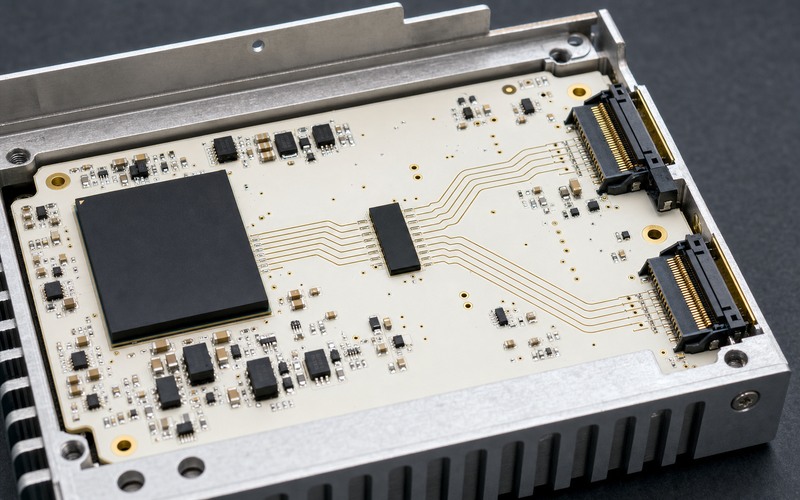
A box with no fan is quieter, sealed against dust, and free of the one part that wears out, which is why so many sites demand it. The design limits of a fanless edge AI box is the price list: with no airflow, the enclosure itself becomes the heatsink, the heat must be conducted from the die to the case through a designed mechanical path, and the sustained compute is capped by how much surface the product's size and mounting can offer to still air. The promise it makes back is real as well: no acoustic signature, no inlet to clog, no bearing to die at year three, and a reliability figure the maintenance contract can lean on.
The design inverts the usual order. The case is a thermal part now, drawn around the conduction path, with the hot silicon mounted against the wall with the greatest fin area and the mounting orientation treated as a specification rather than a customer's choice. Derating closes the loop: the worst ambient plus the case's resistance fixes a power the box may burn, and the silicon is configured down to that number rather than run at its happiest setting.
The boundary is honest and lower than the brochure photo implies. A small sealed box in warm air sustains single-digit watts of silicon comfortably; teens are achievable with serious metal; past that, somebody is quietly assuming a breeze the site never promised. Sun on an outdoor shell adds a load the electronics never asked for, and a dark box on a south wall can gain more heat from the sky than from its own silicon, which is why outdoor fanless designs carry shade, surface finish, and mounting-face conduction in the same budget as the fins.
Power that takes what the site gives
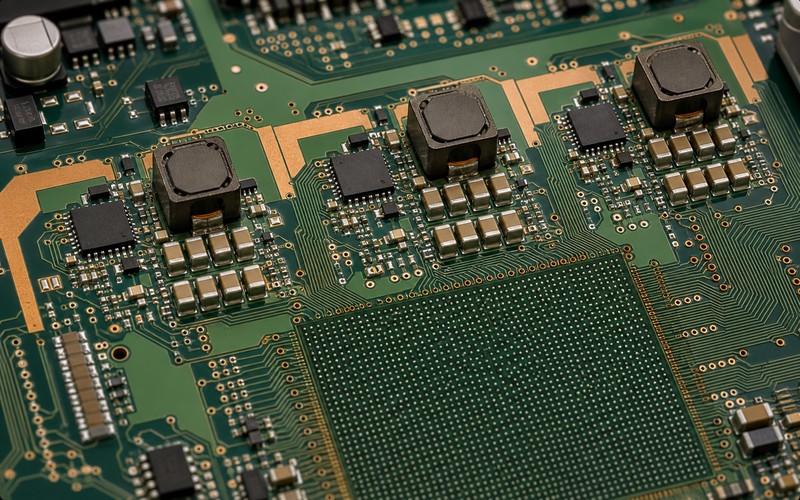
The supply end of the ceiling has its own part to choose. A wide voltage input for an edge box is what stands between the product and whatever the installation calls power: a nominal twelve or twenty-four volt rail that sags on cranking, spikes on load dumps, arrives reversed the day the installer hurries, and wanders with cable length and season. A front end rated across the whole span, with the protection parts the unglamorous pages of the catalogue carry, turns that weather into the clean intermediate rail the rest of the box was designed around, and it is the difference between a product specified for a lab supply and one specified for the world.
What decides it
The ceiling decides first. Site, supply, and shell set the watts before the silicon menu opens, and the box that ships is the one whose compute was chosen inside that number rather than negotiated against it afterwards.
The route decides the schedule. Integrated modules buy time and support and cost unit margin; general boards with accelerators buy cheap reach and cost integration seams; both are right, at different volumes and with different teams, and the honest pick names which one this product is.
Supply closes it at the system level. Modules carry vendor lifecycles, boards carry community ones, fans and connectors carry their own, and the box that ships for years is the one whose every layer had a successor named before the first unit left, and whose bill of materials records why each one was chosen.