Free Shipping Over$200

- Products
- Marking
- Alternative

Choosing Rugged Connectors and Electromechanical Parts for an Outdoor Node
Outdoor hardware often fails at the seam, not at the processor. The radio can be healthy, the firmware can be calm, the power rail can be steady, and the product still dies early because the cable entry, relay, local switch or service connector was treated as a cheap accessory. Rain, dust, UV, condensed water, insects, pulled cables, stiff gloves and rushed maintenance all arrive through the electromechanical layer first. If that layer is weak, the electronics spend their life defending a boundary that was never designed with respect.
This article is not about choosing the flashiest circular connector in a catalog. Many outdoor nodes have a humbler reality. They need one boundary between the outside cable and the enclosure, another boundary between the enclosure wiring and the PCB, a switching device for lamps, pumps, heaters or small actuators, and a way for a technician to configure or recover the unit without turning the enclosure into a leak path. Those decisions connect mechanics, field service and electrical reliability. The right part is the one that makes the whole boundary easier to trust after a season outside.
The first connector decision is about where the outside world is allowed to touch the board
Picking a rugged connector for an outdoor node starts by asking which side of the enclosure owns the abuse. A connector mounted on the enclosure wall is not doing the same job as a small board header hidden inside a sealed box. The wall connector has to face cable motion, water paths, dirt, UV, mis-mating, finger force and often shield or ground decisions. The interior connector lives a gentler life, yet still has to survive vibration, assembly cycles and whatever condensation the box creates after a hot day and a cold night.
The mistake is to treat all of them as generic connection points. Once a cable enters the box, it carries not only signal and power but also movement, fault energy and maintenance risk. If the field cable lands directly on a fine board header near sensitive circuitry, the board inherits every tug and every wiring mistake. If the enclosure connector, strain relief and internal harness divide that stress before it reaches the PCB, the board can use simpler parts and keep the repair story clean. In outdoor nodes, the connector plan is a force-management plan as much as an electrical plan.
Material choice matters too. Plastic that works indoors can chalk, crack or lose latch strength outside. Seals age. Metal shells invite corrosion questions. Gold on signal pins helps with low-current contacts, while tin may be acceptable in different duty. Cable glands and shell geometry can shed water well or trap it exactly where the pins sit. A rugged connector is not just one that looks industrial. It is one whose housing, plating, latch, sealing scheme and mounting method suit the weather, the installer and the maintenance cycle.
The best boundary is the one that keeps field stress outside the logic board and makes replacement boring.
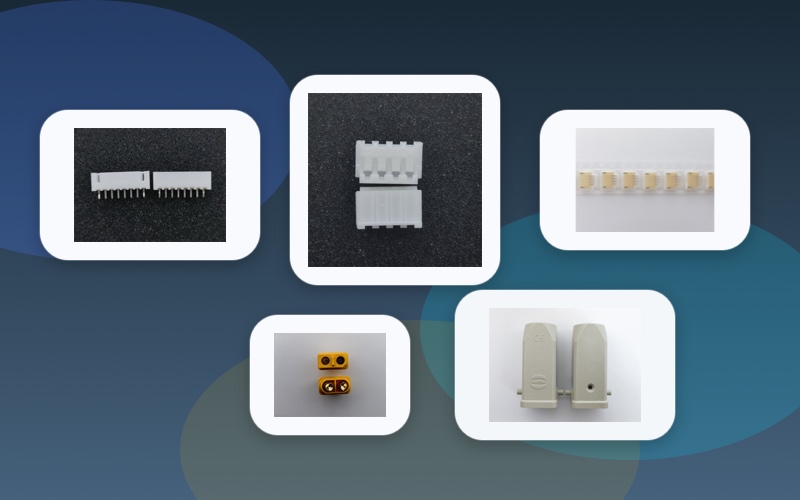
A small JST style board connector is useful inside the enclosure, not as a promise to the weather
S2B-PH-K-S as a common JST wire to board connector represents a part family that appears everywhere in embedded hardware because it is compact, familiar and easy to assemble into internal harnesses. That does not make it an outdoor interface by itself. It earns its place when the enclosure, cable gland and harness architecture have already protected the board from the outside environment, and the engineer still needs a tidy removable connection between the PCB and sensors, battery pack or front panel wiring.
This distinction matters because teams often confuse inside the box with outdoor rated. A sealed enclosure can still breathe moisture, vibrate under wind or machinery, and see cable movement transferred through the harness. A small board connector like this works best when the harness is short, strain is managed elsewhere, and the mating cycle count fits the service plan. It is a packaging tool for internal organization, not a magic field connector. Used honestly, it keeps assembly clean and supports replacement of a battery or daughter harness without soldering. Used as the first thing a field cable touches, it becomes the weak link that breaks after a few seasons.
Its real value is that it lets the PCB stop being the service point. The technician can disconnect a harness, swap a subassembly, and leave the board pads untouched. That reduces lifted pads, hand rework and damage to nearby passives. In a weatherproof node, every avoided solder repair is valuable because resealing the box after an improvised field fix is rarely as good as the factory build.
Relays belong in outdoor nodes when the load side needs an honest physical boundary
SRD-05VDC-SL-C as a low cost control relay points to the familiar blue relay class used for modest switching tasks in controllers, alarm boxes and low-cost automation nodes. It survives in real products for a reason. A mechanical relay gives a visible off state, galvanic separation between coil and contacts, and tolerance for a range of AC or DC loads when chosen inside its real ratings. That can be useful when the node has to switch a siren, valve, lamp, heater enable or remote input that does not want to share the logic domain directly.
The relay decision is not only about current. Outdoor products face loads with inrush, long cable inductance, lightning-coupled noise and poor field wiring discipline. A cheap relay module can switch a benign lamp indoors and then weld contacts outdoors when the load is a motor starter coil or a cable run with a sharp transient at disconnect. Contact material, arc energy, snubber strategy, enclosure venting, board spacing and the real duty cycle all shape the answer. If the relay clicks only during a monthly irrigation event, one set of limits matters. If it chatters under thermostat control every hour in a hot cabinet, another set matters.
G5LE-1 as a general purpose power relay belongs to the stronger side of that conversation. Parts in this class are chosen when the load and life target deserve more trust than the smallest low-cost relay can offer. The physical package is larger because the job is larger. Contact spacing, coil power, switching capacity and endurance all feed into whether the node can switch the load year after year without turning the enclosure into a hot, carbonized experiment. The right relay is the one whose failure mode you can explain before the field teaches it to you.
A solid state relay removes contact wear but pushes the thermal and leakage story onto the board
G3MB-202P as a contactless solid state relay changes the trade. There is no mechanical contact bounce and no contact erosion in the same way, which makes a solid state relay attractive for frequent switching, quiet operation and long cycle counts. That sounds like a clean upgrade until the rest of the system is examined. Solid state relays bring on-state voltage drop, off-state leakage, heat generation and application limits tied closely to the load type. They shift pain from the moving contact to the thermal path and the electrical interpretation of off.
That matters outdoors because a relay mounted in a sealed sunlit enclosure does not cool like a lab bench relay. Leakage that is harmless on a bench can keep a tiny AC load faintly energized. Heat that feels minor in open air can build in a wall box. The absence of a click can help acoustics, yet it can also hide state from a technician who expects mechanical feedback. A solid state relay is appealing when the load cycles often and the thermal budget is honest. It is less appealing when the product needs a true hard isolation feeling, near-zero leakage or a simple failure analysis in the field.
The bigger lesson is that switching parts cannot be chosen apart from the enclosure. Mechanical relay, power relay and solid state relay each move stress to a different place. In outdoor hardware, whatever stress you create will stay trapped in the box with the rest of the electronics.
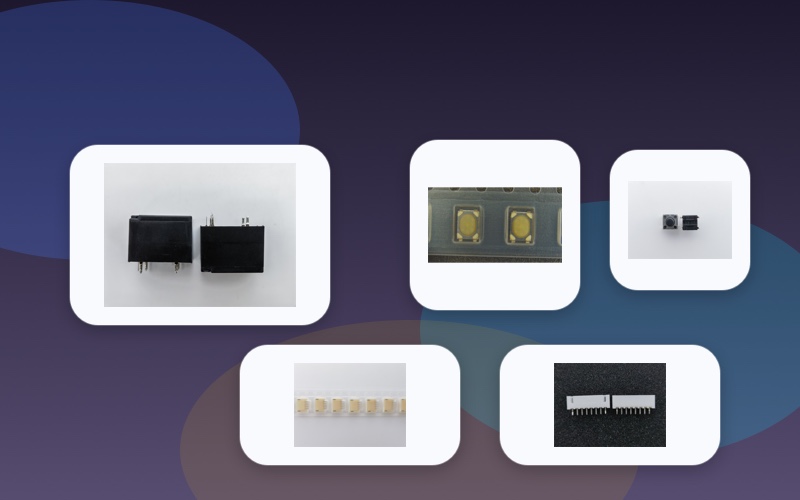
Local switches are not user interface details, they are enclosure liabilities that must earn their place
Tactile and DIP switches for a device sounds simple until the product has to survive outdoors. A pushbutton, reset tact or DIP address bank gives convenient local control during manufacturing and service. It also creates a question: who is allowed to touch it, and through what opening? If the switch sits behind a removable gasketed lid and is only used during commissioning, it may be a clean service tool. If it requires frequent field access, the switch becomes part of the sealing strategy and part of the human-factors story.
Outdoor nodes often need some low-level recovery path for address selection, maintenance mode, pairing or hard reset. The lazy answer is a tact switch or DIP bank exposed through a weak flap. The stronger answer is to decide how often the feature will be used and by whom. A recessed tact switch behind a service lid may be enough for rare reset. A DIP switch may make sense for installers wearing gloves only if the enclosure and labeling support that reality. If remote configuration can replace the local switch, the enclosure may become safer and cheaper. If local control is mandatory, the switch must justify the leak path, contamination risk and assembly complexity it introduces.
Small switches also age. Their contacts oxidize, the actuator can trap dirt, and a membrane can harden under UV or heat. In a node that spends years outdoors, even a setup switch needs an honest environmental plan. The switch that is only touched twice in its life still has to work on the second touch.
The electromechanical layer decides whether the outdoor node is serviceable or disposable
P3.18 is about responsibility boundaries. The field connector defines where cable stress and weather are stopped. The internal board connector defines whether the PCB can be replaced without soldering. The low-cost relay is acceptable only when the load is understood honestly. The larger power relay earns space when endurance and fault energy are real concerns. The solid state relay removes contact wear but asks the enclosure to carry more thermal and leakage discipline. The local switch can save a truck roll or create a leak path that causes one. None of these parts is expensive compared with the processor, yet together they decide whether the outdoor node can be opened, wired, tested, repaired and trusted after real seasons outside.
A rugged outdoor product is not built by sprinkling one IP rated connector onto an otherwise indoor design. It is built by choosing which electromechanical boundary belongs at the wall, which belongs on the harness, which belongs on the PCB and which one should not exist at all. When those choices are made with the installer, weather and service technician in mind, the electronics finally get the quiet environment they were hoping for.