Free Shipping Over$200

- Products
- Marking
- Alternative

Picking a Cellular Class for a Remote Device Without a Gateway
Cellular is the radio for a device that has to report from somewhere with no network of its own to lean on. The real decision is which class of cellular to use, since a modern modem can speak anything from a trickle of NB-IoT up to 5G, and those classes differ in power, data rate, and cost by more than the radios in any other part of this design.
Cellular also carries baggage the short range radios do not. A carrier sits in the middle, a SIM has to be provisioned, a data plan runs as a recurring bill, and an approval step stands between the device and the network before it is allowed to connect at all. The choice reaches past the part into the business around it, and a design that treats the modem as just another chip tends to find the rest of the bill late, after the hardware is frozen. Where the short range radios end at the antenna, a cellular design only starts there, and the parts of it that are not silicon often decide whether the product ships on time and stays connected once it does.
What cellular costs that the other radios do not
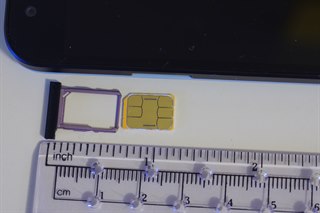
The first cost is the dependency itself. A sub-gigahertz or BLE device talks to infrastructure its owner controls, while a cellular device rents access to a network it does not own and cannot change, on terms the operator sets. That brings a SIM, whether a removable card or an eSIM soldered down, and a relationship with a connectivity provider that has to last as long as the product does, plus a data plan whose per-device cost is small but real and never goes away while the fleet is live.
The second cost is certification, and it lands heavier than a team expects on a first cellular product. A device with a cellular radio has to pass the usual regulatory testing like any radio, and on top of that the industry bodies and many carriers require their own approvals, the PTCRB and GCF programs and per-operator acceptance, before a device may attach to a commercial network. Each of those is a test campaign with its own lab time and fees, and missing one can hold a launch in a single market. Starting from a module that already carries those approvals is what keeps the step from swallowing the schedule, which is the main reason designs use a certified module rather than a bare modem chip.
The third cost is time, in a way the other radios escape. A cellular class can be sunset, and the 2G and 3G networks that a generation of devices ran on are being switched off region by region, stranding hardware that cannot be changed in the field. A product shipping now is making a bet on which class the carriers will still run in eight or ten years, so that lifecycle risk, the recurring data cost, and the coverage a device needs where it will sit are what push the work toward picking a cellular class for a remote sensor deliberately rather than defaulting to whatever the first module happened to support.
Reading the classes, from NB-IoT upward
The classes form a ladder from the smallest, cheapest, lowest power link up to full broadband, and a sound design picks the lowest rung that carries its traffic. At the bottom sits NB-IoT, built to push a few bytes from deep inside a building or far underground where nothing else reaches, on a radio cheap and frugal enough to run years on a battery, at the cost of high latency, no real mobility, and a data rate measured in tens of kilobits a second. A step up is Cat-M, also called LTE-M, which keeps much of the low power story but adds enough rate for a richer payload, supports moving between cells, and can carry voice, which makes it the class for a tracker or a wearable that NB-IoT cannot serve. Both of these lean on two power-save features that let cellular survive on a battery at all. PSM lets the modem tell the network it is going to sleep deeply for a set time and not be paged, so it can stay registered without holding the radio awake, and the device wakes on its own schedule to send. eDRX stretches the interval between the moments the modem wakes to listen for downlink traffic, trading responsiveness for current, and tuned together the two drop the average draw from the steady milliamps an always-attached modem pulls toward something a coin cell or a small pack can feed across years. Above the low power pair, Cat-1 gives real IP throughput of a megabit or so without the deep sleep tricks, which suits a mains-powered or frequently charged device that needs a dependable data link more than a long battery life, and it is deployed widely enough now to be a safe coverage bet where the newer low power classes are still patchy. Higher still, the full LTE categories and 5G open camera-grade and gateway-grade bandwidth, at a power and a cost that only earn their place when the device is moving real data and carries the energy to spend. The method that holds up runs down the ladder rather than up it: fix the payload, the latency the application can tolerate, and whether the device moves, then take the lowest class that meets all three and confirm the carriers in the target markets run it where the device sits, because a class with no coverage in that spot is no class at all. None of this is a one-time call either, since the data plan, the roaming agreements, and the class availability all shift over a product's life, so a design that can be re-pointed in software, or that carries a module spanning more than one class, holds value that a locked single-class part gives up. The teams that have shipped these keep a coverage map and a sunset calendar next to the datasheet, because a radio that tests fine on the bench is only as good as the network still standing in the field years later.
The low power classes and the modules that run them
For a battery device that sends little and stays in one place, the NB-IoT and Cat-M modules are where designs land. The SIM7080G covers both NB-IoT and Cat-M in one module, which lets a product fall back from one to the other depending on what a given network offers, a useful hedge when coverage varies by region and a carrier favors one class over the other. It draws the low sleep current these classes are built around, keeps the board to a single radio part, and exposes the power-save timers so a firmware team can tune the battery life against how often the device has to be reachable.
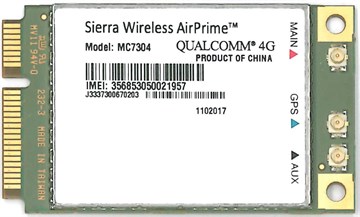
A second part covers the same ground from a different supply base and toolchain. The SARA-R410M handles Cat-M1 and NB-IoT in a compact module with a long track record in metering and industrial telemetry, where its certifications and its stability across years of deployment carry as much weight as the radio. It suits a design that values a proven, well-documented part over the newest feature on the list.
Where a product ships into many countries, band coverage becomes the deciding factor rather than the radio class. The BG96 reaches for global coverage across a wide set of LTE-M, NB-IoT, and 2G fallback bands, with an onboard GNSS receiver, which lets one build of a tracker or a logger work across regions without a separate radio variant for each market. That breadth is the reason it shows up in products meant to travel, where carrying one certified part everywhere counts for more than squeezing the last cent out of a single-region design.
Within the low power tier the modules differ more by bands and supply than by what the radio can do.
When the device needs real bandwidth, and the rest
Some devices have to move more than a trickle, and there the broadband modules take over. The SIM7600 delivers multiband 4G connectivity with the throughput for a camera, a payment or display terminal, or a gateway that backhauls a cluster of other sensors over one cellular link, in a widely used module family that spans regional band variants so a design can pick the build for its market. It draws far more than a low power part, in the hundreds of milliamps while active, so it belongs on a device with mains power or a battery sized for that appetite from the start.
For the same bandwidth in a setting that punishes weak hardware, the EC25 offers industrial grade 4G with the wide temperature range and the long product availability that a fixed installation or a vehicle demands, where a consumer-grade part would age out of supply or fail in the heat. It trades the lowest unit cost for ruggedness and a supply commitment measured in years.
At the top of the ladder, the RM520N brings 5G to a device that genuinely needs the bandwidth or the low latency, such as a fixed wireless access terminal or a high definition video uplink, at a power draw and a price that rule it out for anything a battery has to carry. It is the class to reach for last, only once the data clearly demands it and the power budget can answer. The band picture for 5G is also more fragmented and still settling, so a design reaching for it now accepts a module and a coverage map that will shift under it over the product's life, one more reason it stays a choice of last resort rather than a starting point.
The old networks still anchor a long tail of products. The SIM800L keeps legacy 2G devices connected where those networks still run and the bill of materials is the thing under pressure, though the shrinking 2G footprint makes it a choice for a known short life rather than a new long-lived design. It is cheap and simple and needs almost nothing around it, which still wins a place in a throwaway tracker or a product for a market where 2G is the network that still reaches, and after the sunsets that is nearly all that is left to recommend it.
The integration pattern reaches cellular too, later than it reached the short range radios but just as real. The nRF9160 folds an LTE-M and NB-IoT modem together with an application core, so a low power cellular device can run its own firmware on the same part that holds the radio, with hardware security and an assisted GNSS built alongside. It suits a battery sensor designed around cellular from the start, removing the host MCU and the interface to it the way the integrated parts did across BLE, WiFi, and LoRa.