Free Shipping Over$200

- Products
- Marking
- Alternative

Adding Satellite Positioning to a Connected Asset
Satellite positioning is the one radio on a connected device that only listens. A GNSS receiver hears a faint signal from satellites overhead, works out where it is from the timing of those signals, and never transmits anything back, so its cost is a matter of time and power rather than a link that has to be held open.
That receive-only nature changes the questions a designer asks. There is no carrier to license, no gateway to reach, and no data plan to pay, but there is a hunt for weak signals that can run from seconds to minutes from cold, draws current the whole time the receiver is on, and falls apart under a roof or among tall buildings. A device that has to know where it sits buys that knowledge in battery and in time to a fix, and the rest of the design ends up working around those two costs more than around the receiver itself.
A receiver that only listens
The principle is timing, not direction. Each satellite broadcasts its own clock and its orbital position, the receiver measures how long each signal took to arrive, and that delay gives a distance to that satellite; with four or more of those distances it solves for its own three-dimensional position and corrects its own clock at the same time. The receiver does no transmitting anywhere in this, which is why a positioning fix and a way to report that fix are two separate jobs on the board, often two separate radios.
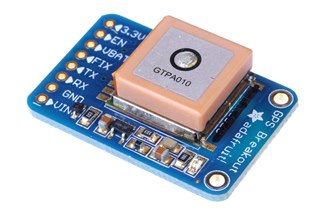
The number that governs a GNSS design is time to first fix, and it is the figure to watch because it drives the power story more than the tracking current does. From a cold start, with no idea of the time, its rough location, or which satellites are overhead, the receiver has to search a wide space of frequencies and codes and then download almanac and ephemeris data straight from the satellites at fifty bits a second, a sequence that can run from half a minute to several minutes under a clear sky and far longer where the signal is blocked. A warm or hot start, where the receiver still holds the recent time and the satellite data, cuts that to seconds, which is the reason a device that fixes often keeps its receiver in a backed-up low power state rather than fully off, trading a trickle of standby current for a fast reacquire. The catch is that the receiver draws its full operating current the entire time it searches and tracks, tens of milliamps that do not let up until it has a fix, so a tracker that wakes cold once an hour spends far more energy finding itself than a continuously powered one ever spends per fix. This is why adding position tracking to a connected asset is a power problem before it is anything else, since a fix is cheap to hold and expensive to reacquire, and a design either keeps the receiver warm at a cost in standby current or accepts a long cold search at a cost in a current spike that the battery has to absorb. Assisted GNSS sidesteps much of this by feeding the receiver the satellite data and a rough time over whatever network the device already has, so it skips the slow broadcast download and fixes in a second or two; on a cellular device that assistance rides the same link for free, while a device with no other radio has to carry the full cold start on its own. The method that holds up is to count how often the device must fix, decide whether it can hold the receiver warm in between, and read the battery against that duty cycle rather than against the headline tracking current that a datasheet leads with. Dead reckoning fills the gaps for a moving asset, since a receiver paired with an inertial sensor can carry the position through a tunnel or an urban canyon where the sky is lost, at the cost of the extra part and a drift that grows until the next real fix pulls it back.
The antenna decides how much of any of this is even possible, more than it does on the radios that transmit, because the signal arriving from a satellite twenty thousand kilometers up is extraordinarily weak by the time it reaches the ground. A good antenna with a clear view of the sky, often with its own low noise amplifier, fixes fast and holds a position; the same receiver behind glass, under a dashboard, or down among tall buildings sees signals bounced off surfaces, the multipath that throws a position off by meters or stops a fix entirely. A device meant to work in those places either lifts its antenna toward the sky and gives it a ground plane, or accepts that its position will sometimes be wrong, and no choice of receiver rescues a design that buries its antenna in a metal enclosure. The active antennas common on these designs add a small low noise amplifier right at the element to make up the cable loss before it adds up, which helps the link, but it cannot recover a signal the enclosure or the placement has already thrown away.
Accuracy and the constellations
Receivers now listen to more than GPS, and a part that tracks several constellations at once, the American GPS alongside GLONASS, Galileo, and BeiDou, has far more satellites to draw from, which buys a faster fix, a tighter position where the sky is partly blocked, and a usable result in an urban canyon where any single system would leave too few satellites in view. Multi-constellation support has become the line that separates the cheapest parts from the rest, and it is the feature that lifts a fix more than any other in the hard places a connected asset ends up in, which is why it now sits on all but the entry tier. The gain shows wherever the sky is broken by buildings or canopy, since more constellations put more satellites above the obstructions at any moment.
The u-blox NEO ladder
The u-blox NEO modules are where a great many designs start, a family that climbs in capability while holding the same footprint and software interface, so a product can move up a rung without a board respin or a firmware rewrite. At the bottom, the NEO-6M handles entry level GPS positioning, a GPS-only part that is cheap and thoroughly documented and good enough for a project that needs a position outdoors and is not counting seconds to fix or meters of error too closely. It shows its age beside the newer parts, and it is chosen now mainly to match an existing design or to reach the lowest cost on a simple tracker. It tracks GPS alone, which is plenty in the open but thin where the sky is cut, and its fix and reacquire times trail the newer parts by a margin a stationary logger never notices and a moving tracker sometimes does.
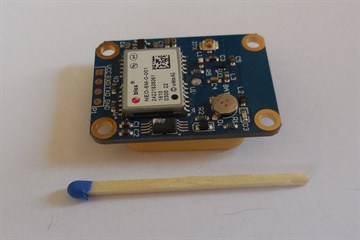
The rung that a design usually climbs to is the multi-constellation part. The NEO-M8N does multi constellation positioning, tracking GPS together with GLONASS, Galileo, or BeiDou, which fixes faster and holds a steadier position in the partly blocked sky a real product lives under rather than the open field a datasheet assumes. It has been the workhorse of the family for years, the default pick where a design wants a dependable fix and a deep base of reference material without paying for the newest silicon. It also brings the configuration depth the family is known for, letting a firmware team tune its update rate and power mode to the product's real duty cycle, which matters on a battery tracker that fixes on a schedule and sleeps between fixes.
The newer generation tightens speed and robustness together. The NEO-M9N delivers faster and more robust positioning, tracking four constellations at once with better behaviour under interference and jamming and in the difficult spots that defeat older parts, which earns its slot on a product that has to fix quickly and hold the fix in the field rather than on a clear bench. It costs more than the M8N and returns the difference wherever the position has to be trusted on the first try.
Within the ladder the call is a straight trade of cost against how fast and how sure the fix must be.
Beyond the ladder
Two needs pull a design off the standard ladder, one reaching for far more accuracy and the others for less cost or less board work. They sit at the edges of what a typical product needs, and each answers a question the mainstream NEO parts leave open, so a design that has one of these needs knows it early.
For accuracy measured in centimeters instead of meters, the ZED-F9P does centimeter level RTK positioning, using real-time kinematic correction data from a nearby base station or a correction network to resolve the carrier phase and pin a position down far tighter than a standard fix can reach. It suits surveying, precision agriculture, drone mapping, and machine guidance, and it brings a dependence on a steady correction stream over NTRIP or a radio link, plus a higher power and cost that only those jobs repay. A design reaches for it when meters are not good enough and the budget can carry both the correction link and the receiver that uses it.
Where board space and antenna design are the binding constraint, the L80 packs a GPS module with an integrated antenna into one small part, which lifts the antenna design and the matching off the team and drops a working receiver onto a crowded board with little RF work. It trades the best achievable sensitivity for the convenience of a patch antenna already tuned on the module, a fair bargain for a compact product that has no room for a separate antenna and a clean ground plane. The integrated antenna also fixes the variable that trips up so many first GNSS designs, since a patch tuned and placed by the module maker behaves predictably where a self-laid antenna on a cramped board often does not.
Where unit cost rules and the constellations needed are regional, the ATGM336H offers low cost positioning with GPS and BeiDou at a price that fits a high volume product for the domestic market, which is why it turns up in trackers and meters built in quantity where every cent is counted and the coverage it offers is the coverage the product needs. It gives up some of the sensitivity and the polish of the u-blox parts in exchange for a price those parts do not chase, and for a great many regional products that is the right exchange.
The pattern across all of them is that the receiver is rarely the hard part: the antenna, the time-to-fix budget, and the way the position gets reported are what a positioning design lives or dies on.