Free Shipping Over$200

- Products
- Marking
- Alternative

Lining Up a Second Source for an AI Chip Before It Goes Scarce
Lining Up a Second Source for an AI Chip Before It Goes Scarce
A second source for an AI processor is rarely a second line item. The processor sits at the center of a network of assumptions about instruction set, accelerator architecture, memory, boot media, power sequencing, clocking, high-speed interfaces, thermal design, firmware tools and production test. If those assumptions are discovered during a shortage, the apparent alternative may demand a new product program rather than a controlled component change.
The practical time to qualify an alternate is while the preferred device is still available for comparison. Engineers can then run both platforms against the same model, input data, power profile and environmental limits. Procurement can verify lifecycle and change-control evidence without making an urgent decision from a short parametric table. The result is an approved path with known boundaries, not a hopeful cross-reference.
The work begins by deciding what level of substitution the product can tolerate. A pin-compatible part, a board-compatible processor module and a functionally equivalent device are three different engineering commitments. Naming the required level keeps design, firmware, compliance and purchasing teams from assuming that the same word means the same amount of work.
Define What a Second Source Must Preserve
Start with the customer-visible function and the released system boundary. Record the neural-network tasks, conventional control workload, camera or audio inputs, output interfaces, boot time, latency, sustained throughput and environmental range. A candidate that reaches a similar peak accelerator figure may still be unsuitable if it misses a required sensor interface, deterministic control task or cold-start target.
Separate mandatory behavior from convenient implementation choices. The product may require a specific video format but not a specific image-signal processor. It may require a wake-word latency but not a particular neural-network operator library. This distinction exposes where software can absorb a difference and where hardware, certification or customer integration makes the requirement fixed.
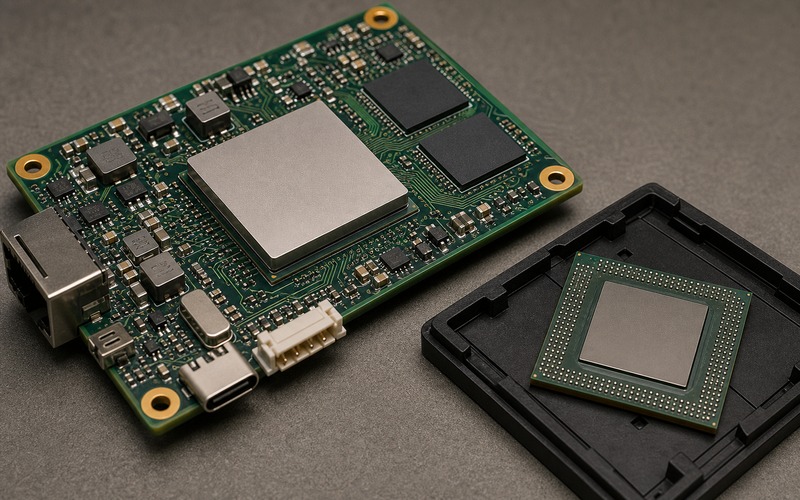
Write the substitution class beside the product revision. A drop-in device should preserve footprint, pins, electrical behavior and software expectations within verified limits. A board-level alternate may use a different package but fit a prepared PCB option. A platform alternate may need its own board and firmware branch. All three can reduce supply risk, but they should never share one approval label.
Compare Workload Evidence Instead of Headline Performance
AI processor comparisons often begin with tera-operations per second, core count or clock rate. Those figures do not show whether the shipped model maps efficiently to the accelerator. Operator support, numeric precision, memory movement, compiler behavior and fallback to the CPU can change real latency and energy use. Run the production model or a representative locked version on both candidates.
Use the same input dimensions, batch size, preprocessing, postprocessing and accuracy threshold. Record warm and cold latency, sustained frame or inference rate, memory use, processor load and power at the connector. If the alternate needs a different quantization method, compare accuracy on the product's own difficult samples rather than relying on a vendor demonstration.
Include non-AI work. Encryption, networking, storage, display, safety monitoring and real-time control may compete for memory bandwidth or CPU time while the accelerator runs. A candidate can pass an isolated benchmark and miss the product target once the complete application is active. The qualification report should show the combined workload and the test conditions behind every number.
Measure the Software Portability Cost
The longest part of a processor substitution is often the software around the model. Check bootloader ownership, operating-system support, board-support package quality, device-tree changes, driver coverage, compiler maturity, debugger access, secure-boot flow, update mechanism and licensing. A processor with good silicon specifications can become a weak second source if the maintained software path is unclear.
Build a small portability layer before it is urgently needed. Keep sensor acquisition, model invocation, result handling and platform services behind interfaces that can be implemented for both processors. This does not make the platforms identical. It limits the amount of application code that must change and gives reviewers a clear place to inspect platform-specific behavior.
Rebuild from a clean environment and archive the exact tool versions, configuration, model conversion steps and binary checksums used for approval. Confirm that another engineer can reproduce the image without private workstation state. A second source that depends on one old computer, one account or undocumented patches is not ready for a production decision.
Check Package, Pinout and PCB Consequences
Package compatibility must be read at ball and function level. Confirm supply pins, ground distribution, reserved pins, boot straps, reset behavior, test pins, high-speed reference voltages and power-domain isolation. Similar package outlines can hide different escape-routing demands or different rules for unused pins. The comparison should include the full package drawing and the latest hardware design guide.
If one PCB is expected to support both parts, review the fanout, via technology, stackup, impedance, decoupling placement and assembly tolerances for each device. Optional zero-ohm links and component populations should be explicit on the schematic and assembly data. Avoid layouts that technically connect both candidates but degrade high-speed signals or power integrity for either one.
Mechanical effects also matter. Package height, heat-spreader location, keepout area, coplanarity, moisture sensitivity and reflow profile can change assembly and enclosure fit. A processor that needs a different heatsink pressure or board stiffener is a board-level alternate even if many electrical pins appear similar.
Requalify Memory, Boot and High-Speed Interfaces
An AI processor depends heavily on external memory. Compare supported memory generations, bus width, speed grade, density, training behavior, topology, termination and approved component combinations. A candidate may have enough nominal bandwidth while requiring a memory device, routing constraint or firmware training sequence that the current board cannot provide.
Check boot media and recovery paths with equal care. Verify ROM boot modes, image authentication, rollback protection, flash addressing, recovery connector access and manufacturing programming time. A different secure-boot chain can affect factory provisioning and field updates long after the processor itself passes a benchmark.
Exercise every product interface at its actual rate and cable or connector condition. Camera lanes, display links, PCIe, USB, Ethernet and audio clocks should be tested for startup, sustained transfer, error recovery and low-power transitions. Interface presence in a block diagram is not evidence that the board and driver combination will meet the released behavior.
Verify Power Sequencing and Thermal Headroom
List every rail, tolerance, ramp order, current transient, power-good dependency and shutdown condition for both processors. Compare regulator capability at realistic temperature and input voltage. A device with lower average power can still demand a sharper transient that pulls a rail out of tolerance or creates a reset during accelerator startup.
Measure power in operating states that matter to the product: boot, model load, peak inference, sustained inference, idle, suspend and fault recovery. Include memory, regulators and supporting clocks rather than quoting processor power alone. This exposes whether the alternate changes battery runtime, adapter margin, enclosure temperature or power-supply component stress.
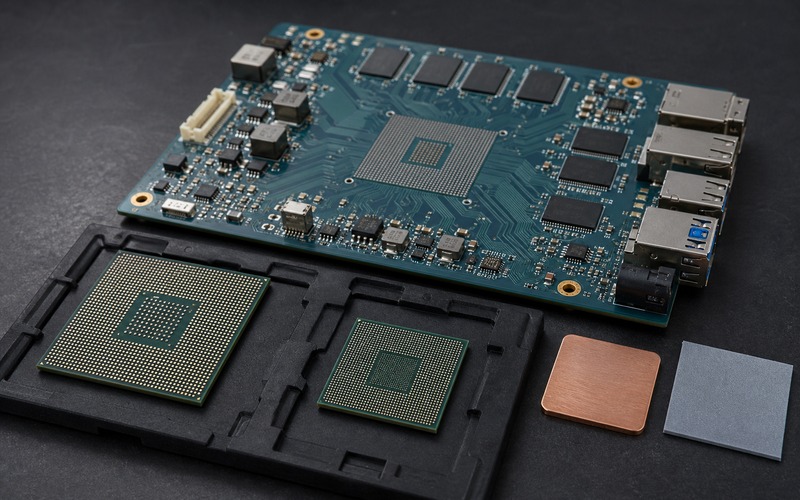
Thermal qualification should use the final enclosure orientation, interface material, heat spreader and ambient range. Record junction estimates, surface temperatures, throttling points and performance after thermal equilibrium. If the candidate needs a larger spreader, stronger airflow or a lower sustained workload, that condition belongs in the approved configuration.
Prototype the Alternate Before Supply Pressure Arrives
A meaningful second-source program produces working hardware. Build enough alternate units to cover electrical bring-up, software integration, environmental tests and assembly learning. One hand-assembled board can reveal basic mistakes, but it cannot show process variation, reflow sensitivity or repeated boot behavior across units.
Use a common acceptance matrix for both platforms. Test the same model set, sensor inputs, interface loads, power conditions, thermal points, update cases and fault injections. Record differences as limits or required changes rather than forcing every result into a simple pass label. The matrix becomes the basis for deciding which product revisions can use the alternate.
Include production engineering early. Programming fixtures, boundary scan, functional test, traceability fields and repair instructions may change with the processor. If the alternate cannot be identified reliably at receiving, assembly and final test, mixed builds can reach customers with the wrong firmware or calibration.
Review Lifecycle and Change-Control Evidence
A second source should reduce correlated risk. Two orderable numbers from the same wafer source, package site or software dependency may fail at the same time. Review manufacturer ownership, fabrication and assembly information available under agreement, product longevity statements, qualification reports, notification processes and last-time-buy terms. Treat marketing availability language as context, not a substitute for controlled evidence.
Check the exact suffix, temperature grade, package option and security variant. Lifecycle status for a family name does not automatically apply to every orderable code. Procurement records should preserve the approved code, acceptable revisions, date-code rules when justified, required documentation and the product revisions covered by approval.
Monitor change notifications for both sources. A new die revision, memory qualification list, package material, boot ROM or software release can alter the comparison. The second source remains useful only while its evidence stays current. Assign ownership for reviewing changes and reopening tests when a change touches an approved boundary.
Keep Commercial Decisions Tied to Engineering Boundaries
Price, minimum order quantity and procurement route matter, but they should be evaluated against the real switching cost. A lower unit price may be offset by a separate board, software maintenance, compliance work, fixture changes or a larger thermal solution. The sourcing comparison should show these one-time and recurring effects without hiding them inside the component price.
Define the evidence required before a purchase order can use the alternate. Typical items include approved manufacturer and orderable code, applicable board and firmware revisions, qualification report, controlled programming image, inspection criteria and release authority. This prevents an urgent buyer from interpreting a candidate list as permission to substitute freely.
Plan how allocation would happen if both sources are used. Decide whether production lines can switch by build, whether customer configurations must remain consistent and how service teams identify the installed platform. Controlled separation is often safer than mixing processors inside one lot, especially when firmware, model conversion or calibration differs.
Maintain a Reproducible Approval Record
The approval record should connect requirements to evidence. Keep the processor code, package, board revision, schematic option, bill of materials, memory population, power configuration, thermal stack, firmware, model version, toolchain and test results together. A short alternate-parts table without those relationships will be difficult to trust months later.
Record known differences openly. The alternate may boot more slowly, support fewer camera modes or require a different standby setting while still meeting the released product requirement. Clear limits are more valuable than an unsupported claim of equivalence. They also tell future teams which tests must be repeated after a design change.
Review the record on a defined engineering cadence and when a notification arrives. Confirm that tools can still be obtained, builds remain reproducible, the reference hardware is available for comparison and the approved configuration has not drifted. This work is small compared with discovering during a shortage that the alternate has not booted in two years.
Final Second-Source Checklist
Before approving a second source, confirm the substitution class, application workload, model accuracy, combined system performance, software ownership, package and pin behavior, memory compatibility, boot security, interfaces, power sequence, transient response, thermal limits, assembly process, production test and traceability. Every result should name the hardware, software and test condition used.
Confirm the exact orderable code and lifecycle evidence, then define which board, enclosure, firmware and product revisions the approval covers. Keep candidates that have not completed this work in an evaluation state. Purchasing language should distinguish clearly between a device worth studying and a configuration authorized for production.
The strongest second source is not the closest name in a catalog. It is a verified product path that the team can build, program, test and identify without improvisation. Doing that work before supply pressure arrives turns a possible replacement into a controlled engineering option.