 Free Shipping Over$200

- Products
- Marking
- Alternative

Sourcing Genuine AI Chips in Prototype Quantities
Sourcing Genuine AI Chips in Prototype Quantities
Prototype teams often need five or twenty AI processors long before a production forecast is firm. That small order can be harder to control than a reel or tray bought under a mature supply agreement. The manufacturer may sell through selected channels, the exact option may have several suffixes, and online listings can mix factory material, broker stock, reclaimed devices and engineering samples. The purchasing method must protect the experiment from a false result caused by the wrong silicon or an unknown source.
Authenticity is a chain of evidence rather than a visual impression. A clean top mark, a convincing bag and a passing boot test each answer a narrow question. Stronger confidence comes from an exact orderable code, a traceable source path, intact manufacturer packaging, consistent lot information, risk-based incoming checks and functional results tied to the received material. No single check should carry the whole decision.
The prototype also has to lead cleanly into production. A board validated with an undocumented chip, a different security option or an engineering revision can force the team to repeat work later. Engineering, purchasing, quality and the assembly partner should agree on the material identity and evidence before payment, then preserve that identity through receipt, assembly, test and design release.
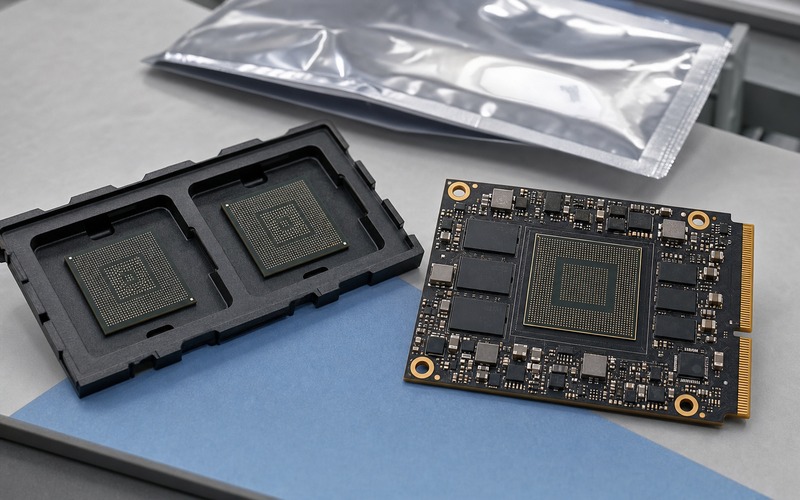
Freeze the Exact Orderable Code Before Asking for Material
Start with the complete manufacturer orderable code, not a family name or the text printed on a development board. Confirm processor variant, package, temperature grade, memory option, security feature, revision policy and packing method against current manufacturer documentation. Similar suffixes can change boot behavior, enabled interfaces, lifecycle treatment or the way the device is supplied. The request should state which differences are unacceptable and which can enter a separate engineering review.
Link the code to the released schematic symbol, footprint, power tree, memory configuration and software branch. For a BGA device, confirm body dimensions, ball map, pitch, package height and assembly profile. Record the date and source of the technical evidence. A screenshot from an online seller is weak control because listings can change and may collapse several options into one page.
Control substitutions at quotation stage. If a supplier proposes another suffix, require the complete code and technical reason in writing before treating it as an option. Engineering should compare the proposed device against the released configuration and record the result as approved, rejected or awaiting evidence. The purchase order, receiving record and assembly traveler must then carry the same identity. This simple discipline prevents a buyer's shorthand, a distributor's internal cross-reference or an assembler's receiving description from silently changing the material used on the prototype.
Choose the Source Path Before Comparing the Unit Price
Manufacturer-direct and authorized distribution routes usually provide the clearest chain from factory packaging to customer receipt. Check authorization for the manufacturer, region and product line rather than relying on a general claim. If the required small quantity is unavailable through that route, document the reason and decide whether the prototype can wait, use an approved development kit, or enter a higher-risk independent-source process.
An independent source needs a named legal entity, physical contact details, quality terms, return conditions and a clear statement of where the material came from. Marketplace ratings and product photographs do not establish origin. Ask who owns the material, whether packaging has been opened or split, and whether lot information will appear on the shipment records. Any refusal or changing answer is useful risk evidence before money moves.
Request Evidence That Matches the Exact Shipment
Ask for evidence tied to the material being offered: clear images of the sealed package, manufacturer label, lot and date information, quantity, packing form and any trace document available through the source. The evidence must describe the exact code and quantity, not a representative photograph from another lot. Keep the original files and correspondence with the purchase record so later reviewers can see what was claimed at the decision point.
Certificates should be read for scope and issuer. A generic statement of conformity does not prove that a specific tray came through an authorized chain, and a distributor packing slip does not replace manufacturer traceability. Compare names, dates, quantities and codes across all documents. Inconsistency does not automatically prove counterfeit material, but it raises the inspection level or stops the purchase until the discrepancy is resolved.
Distinguish Production Silicon From Samples and Reclaimed Parts
Engineering samples, preproduction revisions and production devices can share a package while differing in errata, speed limits, security state or software support. Require the seller to state whether the parts are production material and whether any special markings, erased areas or revision codes are present. Confirm acceptable silicon revisions with engineering before receipt. A cheap early sample can make a prototype appear functional while invalidating qualification work.
Reclaimed devices carry another set of risks: prior electrical stress, unknown thermal history, reballed terminals, altered markings and moisture exposure. A polished package surface or fresh solder balls can hide the history. If the application cannot tolerate reclaimed material, put that requirement in the purchase terms and inspection plan. Avoid assuming that an unused-looking device is factory new.
Keep Original Packaging and Handling Evidence Intact
BGA processors should arrive in a packing form that protects leads or solder balls, controls moisture and supports traceability. Check the moisture-barrier bag, seal, desiccant, humidity indicator where applicable, tray type, pocket fit and protective materials before unpacking. Photograph the shipment as received. Record any torn seal, mixed tray, loose device, damaged pocket or label placed over another label before the material enters normal handling.
A split quantity may legitimately be repacked, but the source should explain the split and preserve the relationship to the original lot. Define who may open the bag, where it is opened, how floor life is recorded and how unused devices are resealed. Small quantities are easy to lose or mix on an assembly bench. Controlled containers and a count at each handoff protect both authenticity evidence and build accuracy.
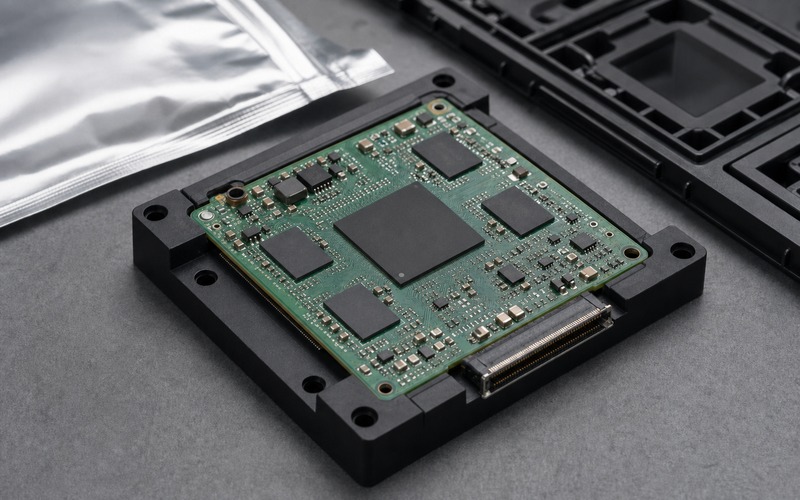
Set the Inspection Depth From the Purchase Risk
Incoming inspection should combine source risk, component value, product consequence and the amount of evidence already available. Basic checks include count, exact code, package dimensions, surface condition, marking consistency, tray fit and document agreement. Higher-risk material may require comparison with a known-good sample, high-magnification inspection, X-ray, X-ray fluorescence, solderability work or electrical characterization by a competent laboratory.
Inspection methods have limits. Visual review can find sanding, recoating, inconsistent fonts or damaged edges, but sophisticated alterations may look clean. X-ray can compare die, bond and internal structure, yet interpretation needs references and experience. Electrical testing can confirm selected functions without proving full history or lifetime. Write the acceptance criteria before testing so a convenient result does not lower the bar after receipt.
Define a sample plan that fits the small quantity. Testing every device may be reasonable for a handful of costly processors, while destructive analysis can consume material needed for the build. State which checks apply to all units, which use a sample and what happens if one unit fails. Keep the tested devices identified so their results are not generalized to an untested mixed lot. When an outside laboratory is used, provide sealed samples, chain-of-custody instructions and a known-good reference where possible, then review the raw observations rather than accepting a one-word verdict.
Tie Every Prototype Board to the Received Lot
Assign an internal receipt or lot identity before devices reach the assembler. The build record should connect each board serial or build group to the exact processor code, source, received lot, date code where available, assembly panel, reflow record and inspection result. Keep unused devices segregated by lot. This trace makes a failure investigation possible and prevents a mixed build from producing contradictory test data.
Retain a sensible sample when quantity allows, together with packaging photographs and the incoming report. If one board fails while others pass, the team can compare material, assembly position and process evidence before blaming software or layout. If all devices came from an undocumented mixed pocket, that distinction is lost and the prototype may need to be rebuilt with controlled material.
Set a disposition path before failures occur. A nonconforming unit should be quarantined with its packaging and board record, not returned immediately without evidence. Decide who may authorize decapsulation, advanced electrical work or supplier return, because those actions can alter the part and weaken a claim. Check whether the failure follows one device, one tray pocket, one assembly position or the whole lot. The answer guides containment and protects the remaining prototypes from repeated handling while the source, assembly process and design are reviewed.
Verify the Processor in the Real Board and Software Stack
A controlled source still needs product-level verification. Check power sequencing, current profile, boot identification, memory training, clocks, interfaces, thermal behavior, accelerator execution, model output and recovery. Include voltage and temperature corners that matter to the product. Compare results with the expected silicon revision and manufacturer errata. Save logs with board identity and software version.
Security options deserve explicit checks. Confirm secure-boot state, debug access, device identifiers, key provisioning path, fuse policy and update behavior before the prototype is treated as representative. Some processor variants differ in enabled security or export options even when the package fits. An unexpected lock state can look like a defective chip, while an unexpectedly open state can invalidate the security design.
Make the Prototype Purchase Useful for Production Release
Record whether the prototype lot is acceptable for engineering evaluation, qualification, pilot production or customer samples. Those are different release levels. If the source path is temporary, state the production sourcing requirement and the tests that must be repeated on production material. Do not let a successful bench test silently convert a high-risk purchase into an approved supply route.
Share confirmed demand, exact codes and qualification timing early with the selected production channel. Recheck lifecycle status and product-change notices before the design is frozen. If the processor is difficult to obtain in small quantities, consider whether an official module or development platform can support early software work while the custom board waits for controlled production silicon.
Use a Payment and Release Checklist
Before payment, confirm supplier identity, authorization or declared source path, exact code, production status, quantity, packing form, lot evidence, inspection rights, nonconforming-material terms and shipping controls. Name the person who can approve any deviation. A verbal substitution should never reach receiving without an engineering decision and an updated purchase record.
Before assembly release, confirm package condition, trace records, incoming result, moisture handling, lot segregation, footprint match and approved software configuration. After test, close the record with board identities, results, retained material and disposition. This sequence does not claim certainty from one photograph or one boot cycle. It builds enough connected evidence for the prototype decision and leaves a clean path to the next purchase.
Related information
- 2026.07.14 MX25V1006FZUI as a Small Density SPI Flash
- 2026.07.14 W25N01GVZEIG as a 1 Gigabit SPI NAND Flash
- 2026.07.14 W25Q64JVZEIM as a 64 Megabit SPI NOR Flash
- 2026.07.14 Planning Supply for a Ten Year AI Product


