Free Shipping Over$200

- Products
- Marking
- Alternative

Settling Component Selection and Long Term Supply for an AI Product
The component that is perfect on its datasheet can still sink a product, because two years on it is hard to buy and four years on it is gone, while the design that chose it was sound. Choosing parts for a product that ships for years turns on whether a part will still be there, not only on what it does. Supply is a design input, and a team that leaves it to someone else finds out late, when the only fix left is a redesign.
The work breaks into a few habits. Naming a backup for the parts that matter before the first one runs short. Watching for the signs that a part is heading toward the end of its life. Knowing why a part that looks like a drop in replacement can still fail in the field. Planning the buy for a product that has to ship for a decade. And getting real parts, not fakes, even in the small quantities a prototype needs. Each of these is settled around the bill of materials, not in the datasheet.
Availability is a spec
A part has two kinds of specification. The first is what the datasheet promises, the speed, the current, the accuracy. The second is whether the part can be bought, in the quantity the product needs, for as long as the product ships. The first is easy to compare and the second is easy to skip, and the second is the one that strands a finished design.
Treating availability as a spec means asking, before a part is designed in, how many makers build it, how long the maker commits to building it, and how it behaves when demand spikes. A part from one maker with no equivalent is a single point of failure in the supply chain, whatever its datasheet promises. The question is asked at selection, where it is cheap to answer, and not at production, where it becomes a crisis.
The parts that deserve this scrutiny are the ones that would be hard to replace, the processor, the analog parts with exact behavior, anything custom. A jellybean resistor needs no supply plan. The accelerator the whole product is built around needs one before the schematic is locked.
The judgment is not all or nothing. A part with two makers and a healthy lifecycle can be designed in with a light touch, a part with one maker and a long build commitment can be accepted with a stockpile plan, and a part with one maker and a short life is the one to design around or avoid. The selection weighs the supply picture the way it weighs a tolerance or a temperature range.
Custom and sole source parts are the sharpest version of the risk. A part made for one customer, or a part only one maker has ever built, has no fallback by definition, and a design that leans on one is betting the product on that maker's plans. Sometimes the part is good enough to justify the bet, and then the bet is made with open eyes and a stockpile behind it.
Naming a second source before you need one
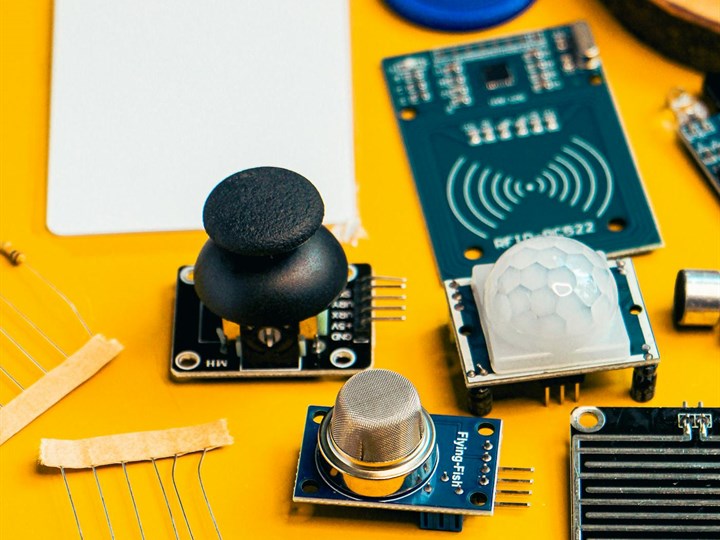
The cheapest insurance against a part going scarce is a second part that can take its place, chosen and checked before the first one is short. When a part lands on allocation and lead times stretch, a design with a qualified alternate keeps building while one without it stops and waits.
Lining up a second source for an AI chip before it goes scarce is work done early or not at all. It means finding a part with the same function and a compatible footprint, checking it against the design, and qualifying it so it can be bought and built the day the first part is short. A second source named in a crisis is months too late, because the qualification it needs takes the time the crisis does not give.
A second source is not always a different maker. It can be the same part from a second distributor, a different package of the same die, or a part from the same family the design is set to accept. The point is that more than one orderable thing can fill the slot, qualified in advance, so a problem with any one of them is not a problem for the build.
Not every part can be second sourced, and that is itself useful to know early. A processor with a unique architecture may have no real equivalent, which makes it a risk that has to be managed another way, by stockpiling or by designing so it can be replaced with effort. Knowing which parts have an alternate and which do not is the first map a supply plan draws.
Qualifying an alternate is more than buying one and trying it. It means running the new part through the same tests the original passed, across temperature and supply and time, and updating the documentation and the approved list so the alternate is a part the line may build, not a part one engineer once checked. A second source that is not qualified is a hope, not a plan.
Reading the signs a part is on its way out
Parts do not vanish without warning. A maker signals a part's decline through its lifecycle status, moving it from active to not recommended for new designs, then to a last time buy, then to obsolete, and each step is a notice to anyone watching.
Reading the lifecycle status to see an AI part heading out is how a team gets ahead of an end of life instead of being caught by it. The status is published, and a part marked not recommended for new designs is telling a designer to stop choosing it now, while a last time buy notice is a final window to order what the product will need before the part is gone for good. A team that tracks the status of the parts in its products plans the replacement on its own schedule rather than the maker's.
The notice only helps if someone reads it. A maker can publish an end of life notice that a team never sees, because no one subscribed to the notices for the parts in its products, and the first the team hears of it is a distributor saying the part is gone. Subscribing to the change notices for the critical parts turns the maker signal into one the team receives.
How a shortage unfolds
A shortage rarely arrives as a clean cutoff. First the lead time stretches, from weeks to months, as the maker order book fills. Then the part goes on allocation, where the maker rations it and a buyer gets a fraction of what it asked for. Then the open market price climbs as brokers buy up the stock that remains, and a part that cost a dollar is quoted at ten.
A team with a plan moves through this calmly. It draws on its stockpile, switches to its qualified alternate, or places its last time buy, each a move prepared before the shortage began. A team without a plan scrambles, pays the broker price, risks a counterfeit, or stops the line, and makes its choices under the pressure that produces bad ones.
What sets off a shortage is rarely the part itself. A whole industry moving to a new technology, a factory disruption, a sudden surge in demand for one kind of chip, any of these can dry up a part that looked safe, which is the reason the plan matters more than any forecast of which part will go short.
The damage from a shortage is rarely only the part. A line that stops idles people and equipment, a late product misses its market window, and a panic buy at the broker price eats the margin the cheap part was chosen to protect. The part is the trigger, and the cost lands across the whole program.
Why a pin compatible swap can still bite
A replacement that matches the original pin for pin looks like a safe swap, and often it is not. The pins can line up while the behavior differs in ways the datasheet keeps in a footnote or leaves to be found.
Why a pin compatible AI substitute can still fail in the field comes down to the differences a footprint match does not cover. A different power up sequence, a tighter timing requirement, a register that defaults to another value, a slightly different analog behavior, any one of these can pass on the bench and fail in a corner case in the field. The swap is qualified by testing the new part in the real design across the real conditions, not by trusting the word compatible.
The failures that hurt are the ones that show up late. A substitute that boots and runs in the lab can still misbehave at temperature, at the edge of its supply range, or after months in service, which is why the qualification has to cover the conditions the bench rarely sees. A swap waved through on a quick test is a fault stored up for the field.
The risk grows with how much the new part differs under the surface. Two parts built to the same standard interface, from makers who both follow it closely, swap with little drama, while two parts that merely share a pinout can hide years of divergent design decisions. The depth of the qualification is set by how far apart the two parts are, not by how alike their packages look.
The datasheets are where the differences hide, and reading both side by side is the cheap first pass. A parameter that is a maximum in one and a typical in the other, a default that differs, a timing window that is narrower, each shows up in the numbers before it shows up in a failure. The bench test then confirms what the comparison flagged and finds what it missed.
Planning supply for a product that ships for years
A product that ships for a decade outlives many of the parts it started with, and planning for that is its own discipline. The parts likeliest to reach end of life are identified early, and the plan covers what happens when each does, a stockpile, a qualified alternate, or a redesign scheduled at a known point.
Planning supply for a ten year AI product means matching the supply strategy to the life of the product. A part the maker commits to building for fifteen years needs no plan, while a consumer part that turns over every couple of years needs a stockpile or an alternate lined up from the start. The bill of materials is reviewed for lifecycle risk the way it is reviewed for cost, since a part that reaches end of life in year three of a ten year product is a redesign waiting to happen.
A stockpile is the blunt tool and it has its own costs. Buying years of a part at a last time buy ties up money, fills a warehouse, and bets on a demand forecast that can be wrong in both directions, leaving either a shortage or a shelf of parts that age. It buys time to redesign in an orderly way, which is its real value, rather than being a plan on its own.
Forecasting the buy is the hard part of a stockpile. Order too little and the shortage still bites, order too much and money sits on a shelf in parts that may age or never ship, and demand a decade out is a guess. The forecast is revisited as the product sells, so the stockpile tracks reality rather than the guess made at launch.
Industrial and automotive grade parts exist partly for this reason. A maker that sells into those markets commits to longer production runs and gives longer notice of end of life, which is part of what the higher price buys, and for a long lived product that longevity can matter more than a few cents saved on a consumer grade part that will not be there in five years.
Getting genuine parts in prototype quantities
A prototype needs a handful of each part, and that small quantity is where counterfeits and gray market parts get in. The authorized channel is built for production volumes, and a team buying ten of something can find itself on a broker site where the part may not be what its label says.
Sourcing genuine AI chips in prototype quantities means getting real parts even when the quantity is too small for the usual channel. Buying from the maker's authorized distributors, at small quantity and a higher unit price, is what keeps a fake out of the prototype, because a counterfeit that passes a quick visual check can waste weeks of debugging a fault that is the part and not the design. The premium on a genuine prototype part is cheap against the time a fake costs.
The check that catches a fake is useful to know even when buying genuine. A careful look at the markings, the date codes, and the packaging against the maker reference catches the crude fakes, and ordering from an authorized source means rarely having to look that hard. The defense is the channel first and the inspection second.
A part bought through the right channel comes with a paper trail. The authorized distributor can show where a part came from and that it is what its label claims, and that traceability is what a later audit or a field failure investigation leans on. A part from a broker with no trail is cheaper today and unaccountable the day something goes wrong, when the question becomes whether the fault is the design or a part that was never genuine. For a product that has to answer for its quality, knowing where its parts came from is part of the supply plan, not separate from it.
Designing so the board can take a substitute
Some of the supply risk is designed out rather than sourced around. A board laid out so a part can be swapped for an alternate, a footprint that accepts more than one maker's version, an interface that does not lean on one part's quirk, survives a part going scarce without a respin.
This is design for substitution, and it costs a little at design time to save a lot later. Choosing a footprint that several makers share, avoiding the one feature only a single part offers, and keeping the design's dependence on any one part shallow all widen the set of parts that can fill a slot. The narrower the design's reliance on a specific part, the less a supply problem with that part can hurt.
It does not always pay to design for substitution everywhere, and knowing where to spend the effort is the skill. The parts with no easy alternate and a real chance of going scarce earn the flexible footprint and the abstracted interface, while the parts with a dozen interchangeable sources can be designed in directly. The effort goes where a part is both hard to replace and likely to need replacing.
Designing a risky part out
The supply-safest version of a risky part is sometimes no part at all. A function that one scarce chip provides can occasionally be met another way, by a more common part with several sources, by folding the function into a chip already on the board, or by choosing an architecture that does not lean on the scarce part in the first place. The dependency that is designed out cannot go short.
This is not free and not always right. Removing a part can cost performance, board area, or engineering time, and an integrated path can trade one risk for another. The move is weighed like the rest, against how scarce and how hard to replace the removed part would be, and it is strongest early, while the architecture is still open to it.
The bill of materials as a living document
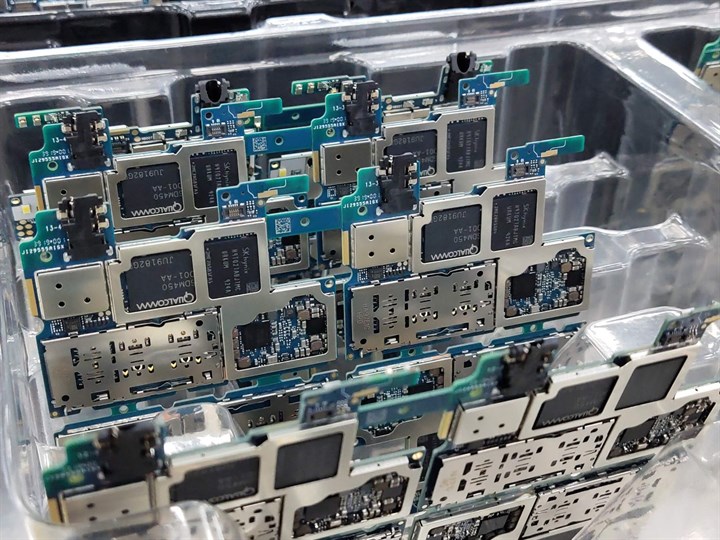
The bill of materials is where selection and supply meet, and on a product that ships for years it is a document that lives rather than a list that is filed. Every part on it carries not just a price and a footprint but a supply status, a count of sources, and a lifecycle stage, and keeping those current is the difference between seeing a problem coming and being surprised by it.
An approved vendor list sits behind the bill, naming for each part the makers and distributors whose version is qualified to be bought and built. The list is what lets purchasing buy an alternate without stopping to ask engineering, because the alternate was qualified and added ahead of time. A part with one name on its approved list is flagged by that fact alone.
The bill is reviewed on a cadence, not once. A periodic pass checks each critical part lifecycle status, its lead time, and how many sources still build it, and flags the ones that have drifted toward risk since the last look. A part that was healthy at design time can be not recommended for new designs a year later, and only a review catches that while there is time to act.
Tools help once the product count grows. Services that track lifecycle and supply status across a whole bill raise end of life notices and shortage flags on their own, which scales the watching past what a person can do by hand over hundreds of parts and several products. The watching still needs someone to act on what it raises.
A bill of materials that is never reviewed is a list of future surprises.
The cost of a part is its risk, not its price
The deepest shift in choosing parts for a product that ships for years is to stop reading the price as the cost. The unit price is what shows on the quote, and it is the smallest part of what a part can cost over the life of a product. The real cost is the risk the part carries: the chance it lands on allocation and stops the line, the chance it reaches end of life and forces a redesign, the chance its one maker has a bad year and the lead time triples, the chance a shortage pushes the team to a broker and a counterfeit slips in. A part that costs a little more from two makers with long lifecycle commitments is cheaper, over a decade, than a part that costs less from one maker who may discontinue it, because the cheap part's true bill includes the redesign it will one day force and the line stops it will cause along the way. This is the reason the supply view and the design view cannot be separated. A purchasing team that chases the lowest unit price without the lifecycle picture buys a future redesign at a discount, and an engineering team that picks the best datasheet without the supply picture designs a product that cannot be built in volume two years on. The teams that ship for years price a part by its whole cost, the silicon and the risk together, and they pay a little more at selection to avoid paying far more at production. The cheapest part is the one that is still there, in volume, the day the product needs it, and every year after.
None of this argues for always paying more. A jellybean part with a dozen sources is bought on price, because its risk is near zero and the price is the whole cost. The shift is to know which parts carry real risk and to price those by the risk, so the effort and the money land where a part can hurt the product rather than being spread evenly across a bill whose lines are mostly safe.
The price is on the quote. The cost is in the years.
Questions that come up settling parts and supply
Why name a second source before a part is short?
Because qualifying an alternate takes time a shortage does not give. A second source found and checked before it is needed keeps the line building when the first part lands on allocation, while one started during the crisis arrives months too late to help.
How do I tell a part is heading for end of life?
By tracking its published lifecycle status. A move to not recommended for new designs is a signal to stop choosing it, and a last time buy notice is the final window to order what the product needs. Watching the status puts the replacement on your schedule, not the maker's.
Is a pin compatible part a safe replacement?
Not on its own. Matching pins does not guarantee matching behavior, since power up sequence, timing, register defaults, or analog detail can differ and fail in a corner case in the field. Qualify the substitute in the real design across the real conditions before trusting it.
How do I plan parts for a product that ships ten years?
Match the supply strategy to the product's life. Identify the parts likely to reach end of life, and for each plan a stockpile, a qualified alternate, or a scheduled redesign. Favor parts with long lifecycle commitments, and review the bill of materials for lifecycle risk as you would for cost.
How do I avoid counterfeits when buying prototype quantities?
Buy from the maker's authorized distributors even at small quantity and a higher price. Broker and gray market channels are where fakes get into small orders, and a counterfeit can cost weeks of debugging a fault that is the part. The premium on a genuine part is cheap against that.
Should I pick the cheapest part that meets the spec?
Only after weighing its supply risk. The lowest unit price can carry the highest total cost if the part has one maker, a short lifecycle, or a history of shortages. Price a part by the silicon and the risk together, not by the quote alone.
Who owns supply
Supply is not one team job, and the products that handle it well are the ones where engineering and purchasing decide together. Engineering knows which parts are hard to replace and why, purchasing knows which parts are hard to buy and why, and a part is safe only when both views agree on it. Split the two and each optimizes its own number while the product carries a risk neither one owned.
The handoffs are where this breaks. A part chosen by engineering with no word from purchasing can be a sourcing headache that looked fine on the schematic, and a part swapped by purchasing for a cheaper equivalent with no engineering sign off can be the pin compatible substitute that fails in the field. The approved vendor list is the contract between them, the agreed set of what may be bought, kept current by both.
A part is only as safe as the agreement between the people who choose it and the people who buy it.
Who carries the budget shapes the behavior. When purchasing is measured only on unit price, it buys cheap and the lifecycle risk becomes engineering's surprise, and when engineering is measured only on the design, it picks the best part and the sourcing becomes purchasing's headache. A shared measure, the cost over the product life, is what aligns the two.
Settling selection and supply together
The order keeps the two from being done separately and badly. Judge each part by its datasheet and its availability at the same time. Name a second source for the parts that have one, and flag the parts that do not. Track the lifecycle status of the parts in the product. Design so the board can take a substitute where a part is hard to replace. Plan the buy against the life of the product. And source genuine parts from the first prototype on.
The thread through all of it is that supply is a design input, equal to the specs, because a product is only as buildable as its scarcest part. Get this right and the product ships for as long as it is meant to. Get it wrong and the best design on paper stops at the first part that cannot be bought.
None of this slows a product down once it is habit. The questions get asked while a part is being chosen anyway, the alternate is qualified in the time a design has before production, and the bill is reviewed on a cadence that runs in the background. The cost is small and early, and it buys a product that keeps shipping.